


.svg)
.svg)







.png)
























































Simplify your customs today
Calculate duties and taxes

.avif)
.avif)
.svg)
Streamlining customs clearance

.svg)
.svg)
.svg)
.svg)
import into canada
Import into the USA
.avif)
© 2026 Borderbuddy, All rights reserved.
Designed by SupaStellar


Duty calculation often confuses because the final number rarely matches early expectations. Many imports seem straightforward until U.S. Customs and Border Protection (CBP) completes its review and applies charges that seem higher than planned.
This post explains how duties are calculated for U.S. imports and why duty outcomes depend on several factors working together.
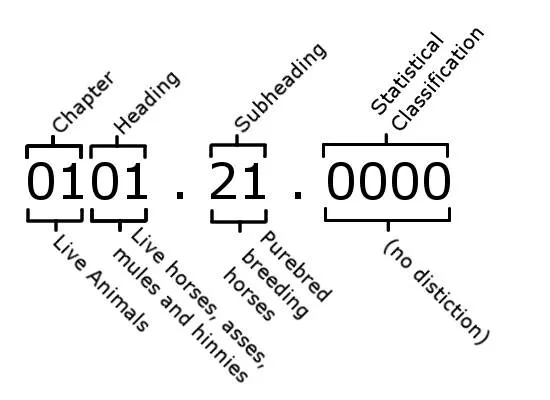
Duty calculation begins with classification. U.S. Customs uses the Harmonized Tariff Schedule of the United States (HTSUS) to determine which duty rate applies to a product. The classification reflects what the product is and how it functions.
When classification remains unclear, duty calculation remains uncertain. Incorrect classification can result in reassessment of duties, interest, or penalties.
Each HTS classification carries its own duty rate. That rate can be:
Correct classification ensures that U.S. Customs applies the right rate from the start. Some classifications also trigger additional trade remedy duties.
After classification, the declared value becomes the next key input. U.S. Customs reviews the value to confirm that it:
Duty is calculated by applying the duty rate to the declared value. When the value lacks clarity, customs may reassess the amount. CBP may request supporting documents such as purchase orders, contracts, or proof of payment.
Some duty rates depend on quantity rather than value alone. U.S. Customs reviews:
Errors in quantity or unit details can change duty outcomes. Incorrect units of measure can result in miscalculated duties.
Certain products face additional duties beyond the base rate. Tariffs may apply based on:
These charges add to the total duty and often surprise people who expected only base rates. Additional tariffs are calculated separately and then added to the base duty amount.
U.S. Customs relies on documentation to calculate duties correctly. Duty issues arise when:
Clear documentation supports accurate calculation. Incomplete documentation increases the likelihood of reassessment or additional review.
Duty amounts often change near release because:
By the time the duty is finalized, shipments already feel close to delivery. Physical arrival does not finalize duty liability—classification and valuation review do.
Imports face fewer surprises when:
Early planning leads to more predictable duty outcomes. Pre-import review reduces the risk of post-arrival reassessment.
U.S. import duties depend on classification, value, quantity, and tariff treatment. When those elements align clearly, duty calculation becomes predictable and easier to manage.
Accurate classification and valuation are the foundation of accurate duty assessment.
Knowing duty exposure early makes planning easier. Advance duty estimates reduce unexpected cost increases at the border.
Use the BorderBuddy duty and tax calculator to get a quote. It helps you estimate expected import duties, tariffs, additional charges, taxes and fees, and the total landed cost before shipping.
BorderBuddy’s calculator also uses AI to help classify goods with the correct HTS classification, which determines duty rates on U.S. imports.
People reviewing the duty calculation often ask next:
If you still haven't found what you're looking for, BorderBuddy is here to help.
Our team can help you get clear answers and avoid border delays. For U.S. imports, accurate inputs determine accurate duty outcomes.

.svg)

.svg)