


.svg)
.svg)































.png)



































Simplify your customs today
Calculate duties and taxes

.avif)
.avif)
.svg)
Streamlining customs clearance

.svg)
.svg)
.svg)
.svg)
import into canada
Import into the USA
.avif)
© 2026 Borderbuddy, All rights reserved.
Designed by SupaStellar


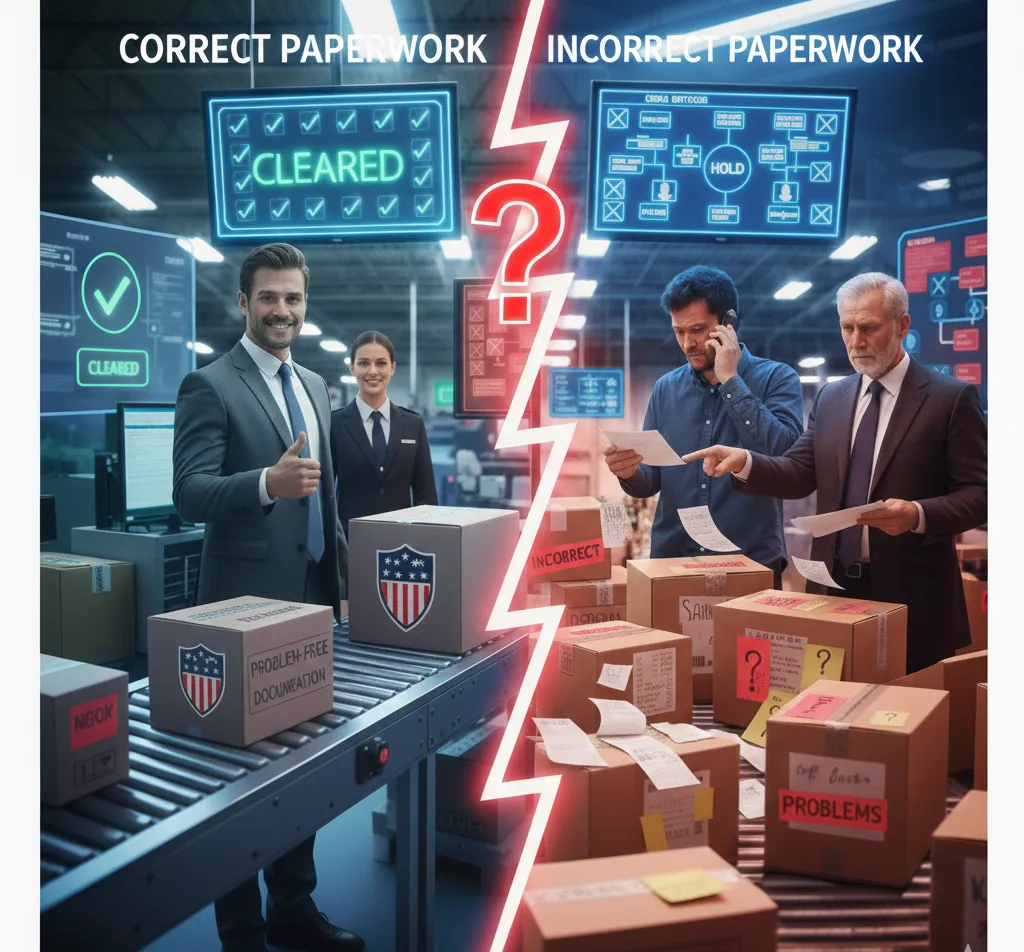
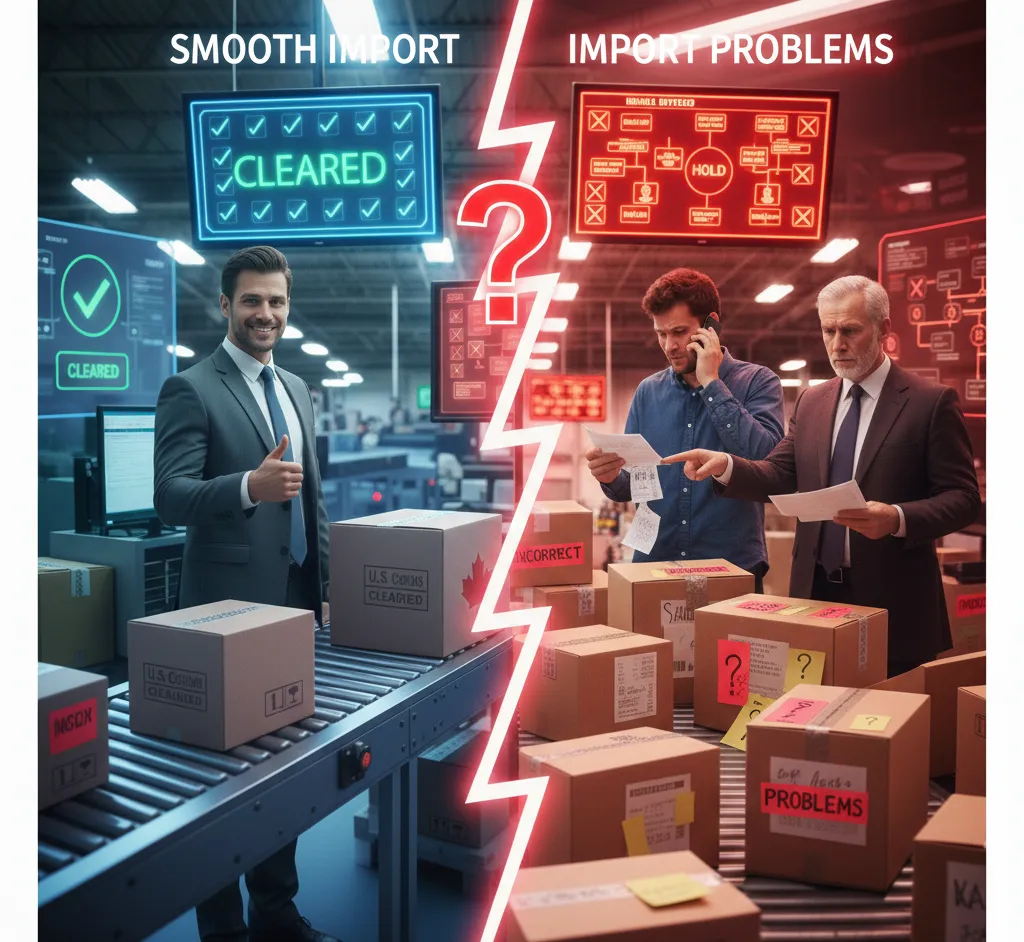
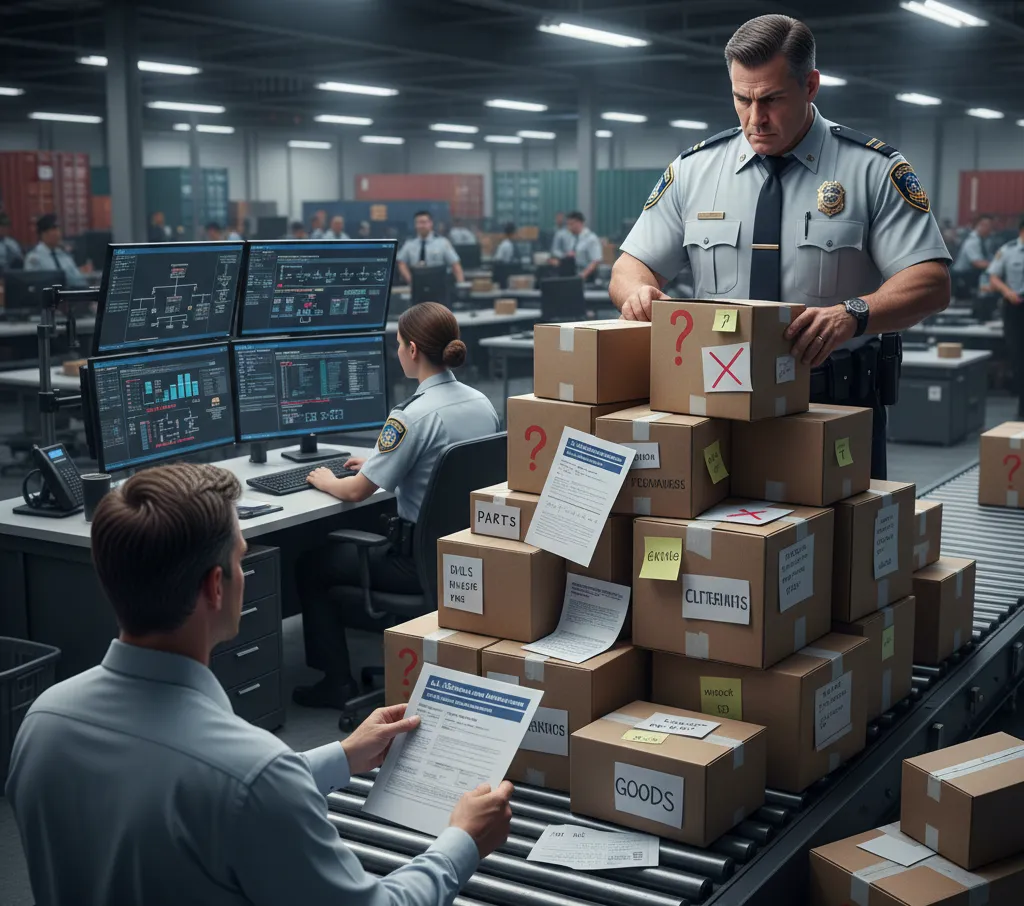
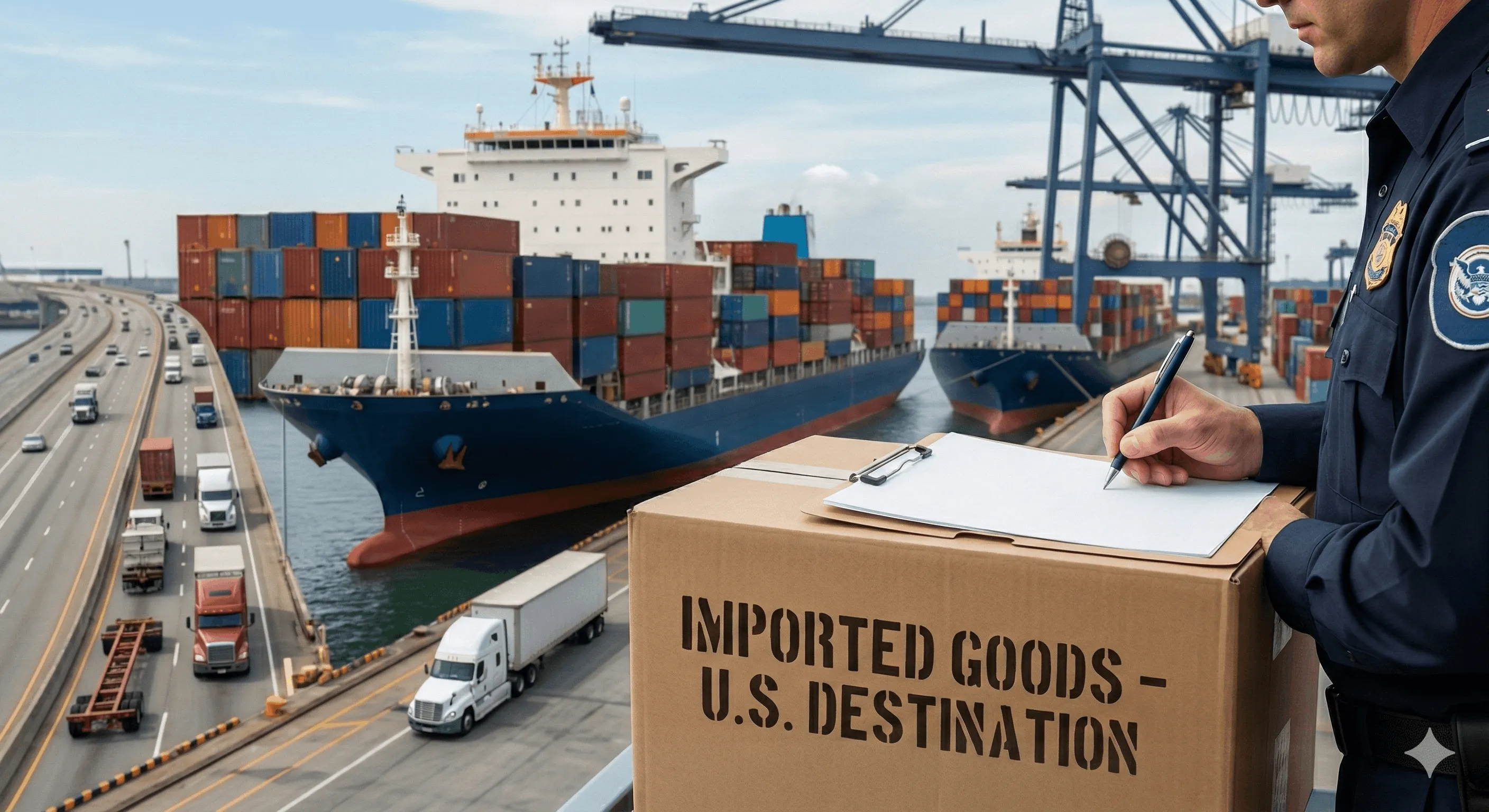
Most U.S. import delays begin with paperwork that appears complete but fails to explain the shipment clearly. U.S. Customs and Border Protection (CBP) reviews documents to understand what entered the country, how it should be classified, and who holds responsibility. When documents leave gaps, clearance slows down or stops.
CBP reviews entries filed in ACE (Automated Commercial Environment), and documentation inconsistencies often trigger holds or Requests for Information.
This post covers the most common documentation mistakes in U.S. imports and how they create avoidable problems.
Generic descriptions create immediate problems.
The following terms do not give U.S. Customs enough detail to classify goods correctly:
Clear descriptions explain:
Specific descriptions reduce questions and speed up review. Descriptions must support the declared HTSUS classification.
Invoices often exist, but still cause delays. Problems appear when invoices:
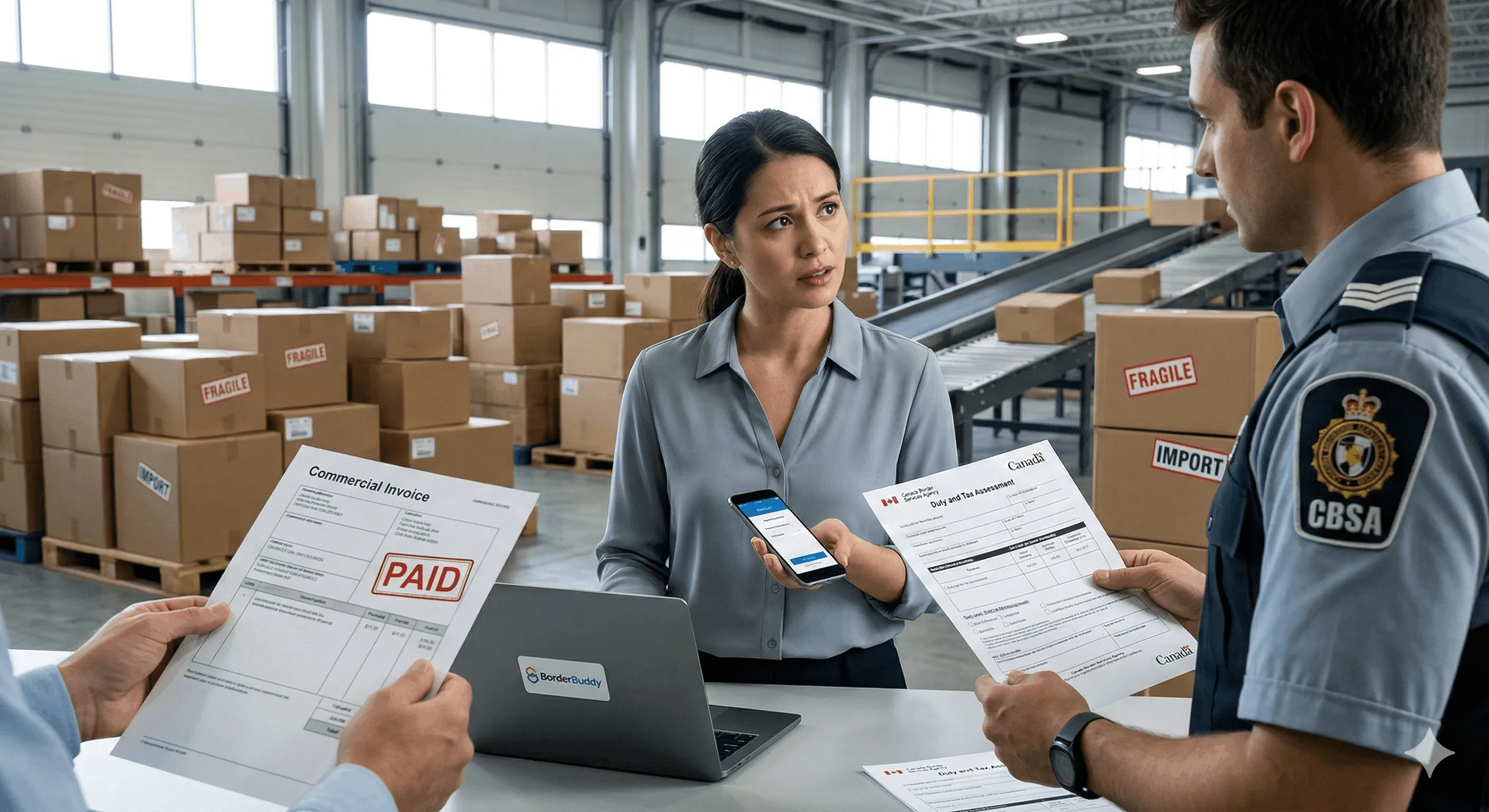
U.S. Customs uses the invoice to understand value and responsibility. Invoices that function as receipts rather than explanations slow clearance. CBP may request supporting documents such as purchase orders, contracts, or proof of payment if the valuation is unclear.
U.S. Customs compares details across all submitted paperwork. Issues arise when:
Consistency matters as much as completeness.
HTS classification determines duty rates and the treatment of compliance. Documentation problems arise when:
Incorrect classification often leads to reassessment and additional review. CBP may reclassify the goods and assess additional duties, interest, or penalties.
U.S. Customs needs a clearly identified importer of record (IOR). Delays occur when:
Without a clear responsible party, U.S. Customs cannot finalize clearance. Entry filings may be rejected if the importer's authorization is incomplete.
Shipping documents move goods. Customs documents explain goods. Many imports slow down because the paperwork supports transportation, but does not support compliance. U.S. Customs needs clarity beyond labels and tracking numbers.
Bills of lading and airway bills do not replace compliant commercial invoices or entry summaries (CBP Form 7501).
Partial fixes create new problems. When documentation issues appear, sending isolated updates often causes:
U.S. Customs expects the documents to be a complete set. Submitting piecemeal corrections can extend holds and increase storage or examination costs.
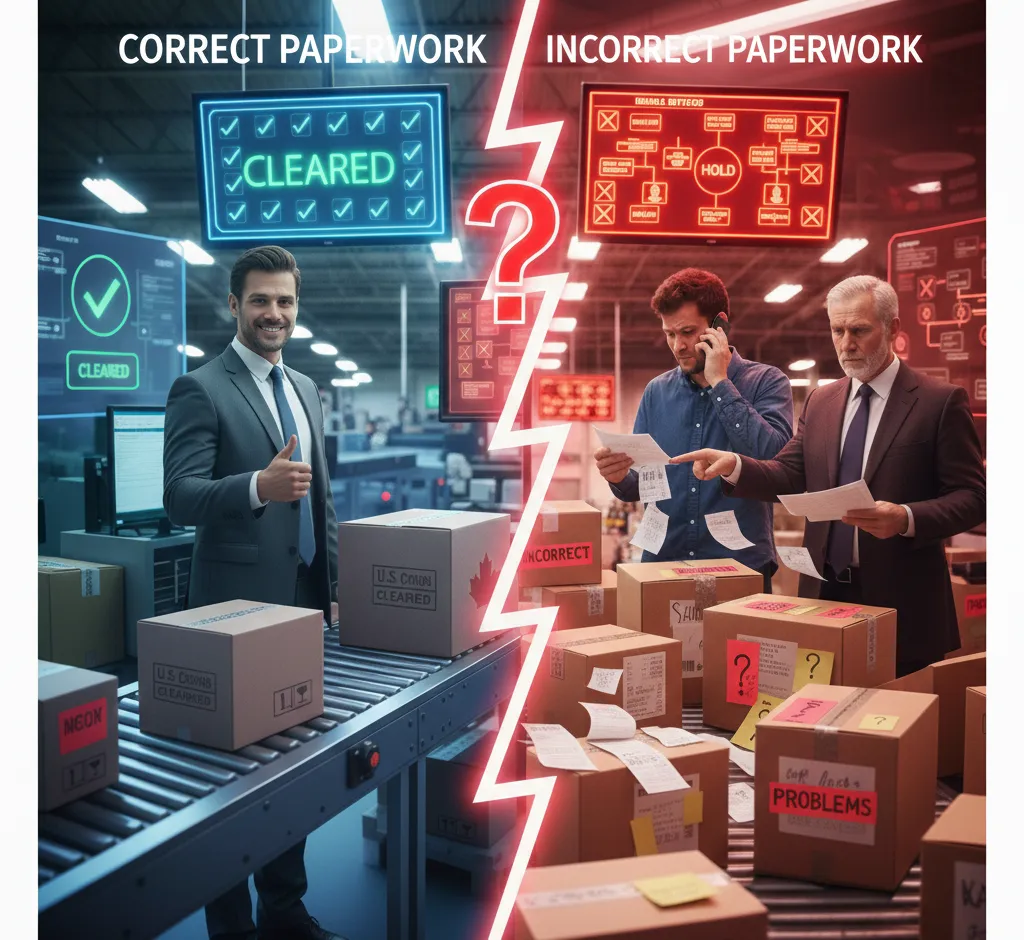
Documentation mistakes in U.S. imports usually involve a lack of clarity, not the omission of forms. Clear descriptions, accurate classification, consistent values, and defined responsibility prevent most delays before they start.
Pre-import review of documentation significantly reduces enforcement risk and the need for post-arrival corrections.
Classification and documentation directly affect duty rates. They also determine whether additional regulatory controls apply.
Use the BorderBuddy duty and tax calculator to get a quote. It helps you estimate expected import duties, taxes and fees, potential tariff-related charges, and total landed cost before shipping.
BorderBuddy’s calculator also uses AI to help classify goods with the correct HTS classification, which determines duty rates and supports accurate documentation. Accurate classification strengthens both compliance and cost predictability.
People addressing documentation issues often ask next:
If you still didn’t find what you were looking for, BorderBuddy is here to help.
Our team can help you get clear answers and avoid delays at the border. Clear documentation is the fastest path through U.S. Customs.

.svg)
.svg)