


.svg)
.svg)



.png)

















































Simplify your customs today
Calculate duties and taxes

.avif)
.avif)
.svg)
Streamlining customs clearance

.svg)
.svg)
.svg)
.svg)
import into canada
Import into the USA
.avif)
© 2026 Borderbuddy, All rights reserved.
Designed by SupaStellar


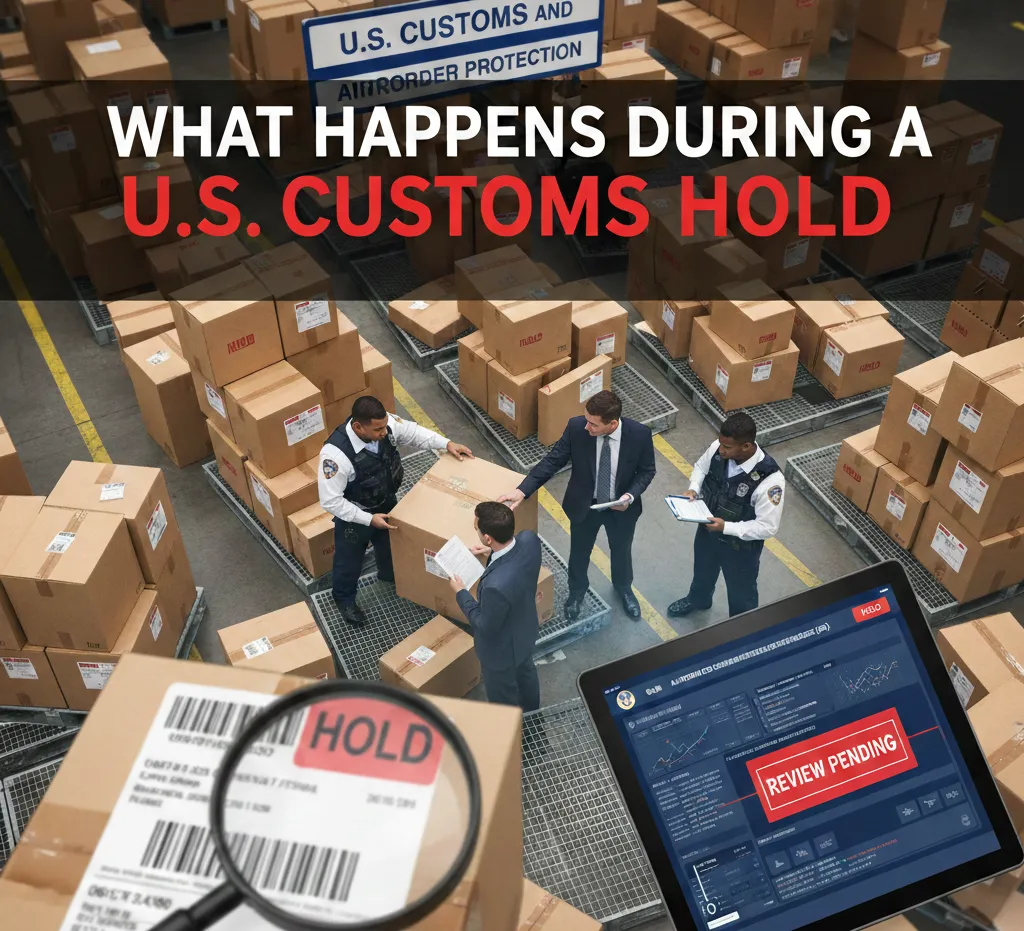
A U.S. customs hold often creates confusion because the shipment appears to stop without explanation. The shipment arrives, and the tracking status changes, but movement pauses. At that point, U.S. Customs and Border Protection (CBP) needs something clarified before clearance can continue.
In most cases, the hold appears in ACE (Automated Commercial Environment) and may not be fully visible through standard carrier tracking updates.
This post explains what happens during a U.S. customs hold and why these holds occur so often in real import situations.
A customs hold means U.S. Customs has paused the clearance process. Customs places a hold when it needs:
A hold does not automatically mean a violation or seizure. It signals that the review is incomplete. However, unresolved holds can escalate into enforcement action if compliance is not demonstrated.
In our experience, holds usually occur for a few specific reasons.
Customs cannot review a shipment when product descriptions are too general. Descriptions must explain:
Vague descriptions trigger follow-up questions and hold. Generic terms such as “parts,” “accessories,” or “equipment” often lead to clarification requests.
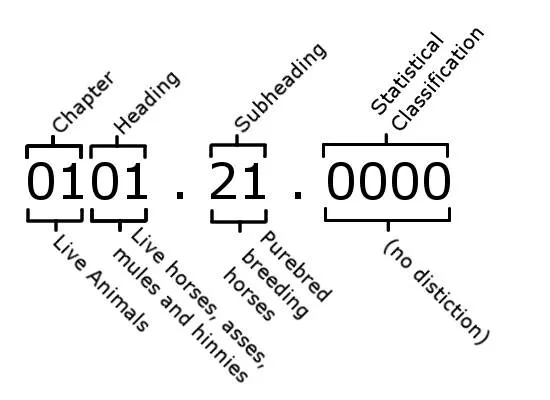
HTS classification (HTSUS) determines duty rates and the treatment for compliance. Customs places a hold when:
Classification questions often require clarification before release. CBP may reclassify the goods and assess additional duties if the original classification is unsupported.
Customs reviews the declared value closely. Holds occur when:
Customs must confirm the value before calculating duties and fees. CBP may request purchase orders, contracts, or proof of payment to verify declared value.
Customs needs to know who takes responsibility for the import. Holds occur when:
Without a responsible importer, clearance cannot move forward. Entry filings may be rejected if the importer's authorization is incomplete.
During a customs hold, U.S. Customs may:
The shipment will not proceed until customs receives clear answers. Storage, demurrage, and examination fees may accumulate while the hold remains in place.
Holds feel sudden because:
Most holds result from a lack of clarity earlier in the process.
Clear and complete responses shorten hold time. Shipments move again when:
A shipment’s physical arrival does not guarantee legal release.
Preparation reduces last-minute disruption. Imports face fewer holds when:
A U.S. customs hold pauses clearance until customs gains confidence in the shipment details.
Clear documentation, accurate classification, and defined responsibility help shipments move through review faster.
Customs release depends on demonstrated compliance—not shipment urgency.
Accurate classification and duty planning reduce surprises that lead to holds. They also reduce the likelihood of post-arrival reassessments.
Use the BorderBuddy duty and tax calculator to get a quote. It helps you estimate expected import duties, taxes and fees, potential tariff-related charges, and total landed cost before shipping.
BorderBuddy’s calculator also uses AI to help classify goods with the correct HTS classification, which determines duty rates on U.S. imports. Accurate classification strengthens both compliance and cost predictability.
People dealing with customs holds often ask next:
If you still didn’t find what you were looking for, BorderBuddy is here to help.
Our team can help you get clear answers and avoid delays at the border. In U.S. imports, clarity is what moves a shipment off hold.

.svg)
.svg)