


.svg)
.svg)







.png)












































Simplify your customs today
Calculate duties and taxes

.avif)
.avif)
.svg)
Streamlining customs clearance

.svg)
.svg)
.svg)
.svg)
import into canada
Import into the USA
.avif)
© 2026 Borderbuddy, All rights reserved.
Designed by SupaStellar


Many vehicle-related inquiries start the same way:
For many importers, admissibility is the first problem they didn’t know existed.
This post explains what makes a vehicle admissible for import into Canada, based on the issues and surprises that repeatedly arise with customers.
When CBSA says a vehicle must be admissible, they are asking a simple question:
Is this vehicle allowed to enter Canada under current rules?
Admissibility is not about:
A vehicle can be fully documented and still be inadmissible. This is one of the most frustrating realizations for people trying to import their vehicles to Canada. Admissibility is a yes-or-no gate. Even if duties, taxes, and surtaxes are fully paid, CBSA will not release a vehicle that is not eligible to enter Canada.
Based on our experience, admissibility issues usually appear:
Most callers assumed:
“If it’s a car, it should be fine.”
That assumption is what causes the problem.
Many callers discover admissibility issues when CBSA determines the vehicle:
This often leads to:
“I didn’t know there were different rules.”
Admissibility is assessed before clearance can be completed.
2. RIV Rules Are Often the Real Issue
For most U.S.-origin passenger vehicles, admissibility is tied to the Registrar of Imported Vehicles (RIV) program. Many vehicles must meet RIV requirements, including Canadian safety standards and required modifications, before they can be registered in Canada. If a vehicle is not eligible under RIV rules, CBSA will treat it as inadmissible at the border.
See the Vehicle Import Compatibility (Admissibility) list at Transport Canada for information on vehicle admissibility and the Registrar of Imported Vehicles (RIV) programincluding how Transport Canada determines whether a U.S.-purchased vehicle can be imported into Canada and what compliance steps may be required.
Admissibility problems often surface because of:
Open recalls are one of the most common reasons a vehicle cannot proceed. Many imports require proof that all manufacturer recalls have been cleared before the vehicle is considered admissible.
Vehicles with salvage history, branded titles, or structural damage are more likely to face admissibility restrictions or outright refusal.
From the importer’s side, this feels sudden. From CBSA’s side, the vehicle’s background isn’t clear enough.
A prevalent pattern we see is:
By the time CBSA reviews the vehicle, options may already be limited. This is why callers often say:
“If I had known this earlier, I wouldn’t have bought it.”
Another frequent misconception is:
“I have all the documents, so it should be allowed.”
Documents alone do not determine admissibility. CBSA looks at whether:
If the paperwork doesn’t support admissibility, clearance stops.
When CBSA determines a vehicle is inadmissible:
This is usually the point at which calls become urgent, because the issue cannot be resolved with simple paperwork changes. No broker or carrier can override an inadmissibility finding. The vehicle must meet the entry rules before clearance can continue.
Based on our experience, sometimes:
But in other cases:
This is why admissibility is one of the highest-risk points in vehicle imports.
Admissibility problems are common because:
Most callers only learn about admissibility when CBSA raises it.
From the discussions where outcomes were better, admissibility problems were less likely when:
Admissibility issues are much more complex to solve after the vehicle reaches the border.
Are Canadian Surtaxes still on vehicles made in the U.S.?
Most Canadian surtaxes on U.S.-origin goods were repealed in September 2025; however, vehicles remain exempt. Importers need to confirm the surtax treatment before assuming only regular duty applies.
It’s All About the VIN
If you're importing a car, truck, motorcycle, or RV from the United States, don’t assume it will automatically be subject to surtax, though. What matters most is where the vehicle was manufactured, not where it was purchased. Many brands are not subject to the surtax when the vehicle was built outside the U.S., even if it is sold in the U.S.
A quick check of the first digit of the Vehicle Identification Number (VIN) can tell you a lot:
What this means: A vehicle purchased in Florida but manufactured in Mexico (VIN starting with 3) is not subject to the surtax. This is especially relevant for brands such as Toyota, BMW, Mercedes, Volkswagen, Hyundai, Kia, and Mazda, whose North American manufacturing operations often span multiple countries.
The VIN is one of the fastest ways to assess surtax exposure, but admissibility still depends on Canadian compliance rules, not just where the vehicle was built.
For vehicle imports into Canada, admissibility is a gate, not a formality. If a vehicle is not admissible:
Understanding admissibility and the total cost of importing early can prevent some of the most expensive and stressful customs issues importers face.
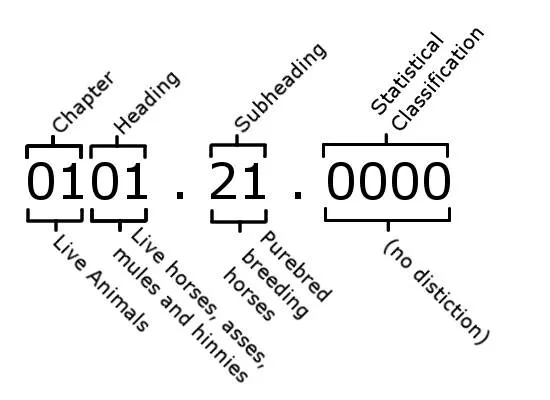
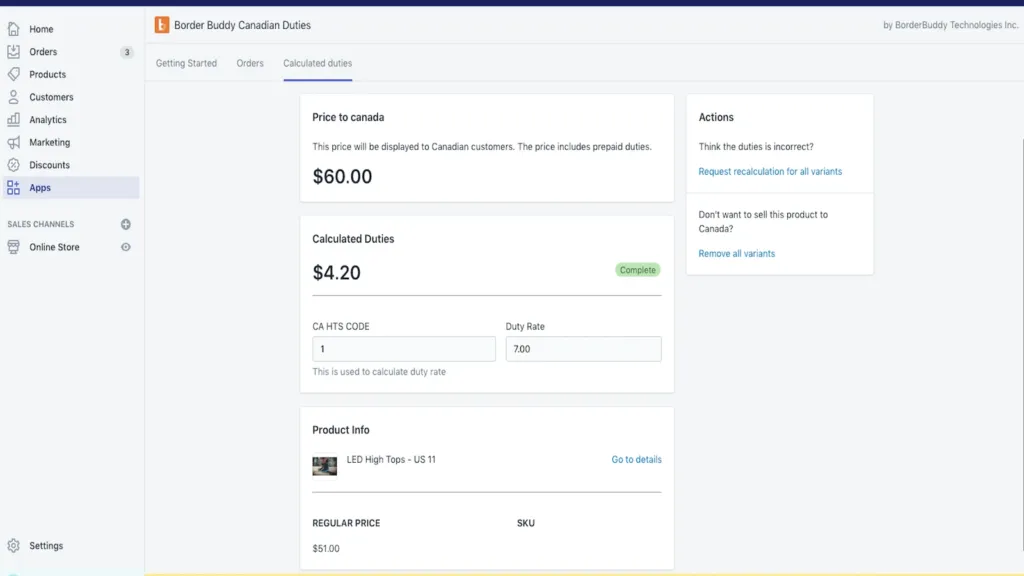
Use the BorderBuddy duty & tax calculator to estimate duties, taxes, and surcharges on your vehicle. BorderBuddy’s calculator also uses AI to help classify goods under the correct HS (Harmonized System) code, a key factor in determining the duty rate applied to an import.
People dealing with vehicle admissibility issues usually ask next:
If you still didn’t find what you were looking for, BorderBuddy is here to help.
Our team can help you get clear answers and avoid delays at the border.

.svg)

.svg)