


.svg)
.svg)





























































Simplify your customs today
Calculate duties and taxes

.avif)
.avif)
.svg)
Streamlining customs clearance

.svg)
.svg)
.svg)
.svg)
import into canada
Import into the USA
.avif)
© 2026 Borderbuddy, All rights reserved.
Designed by SupaStellar


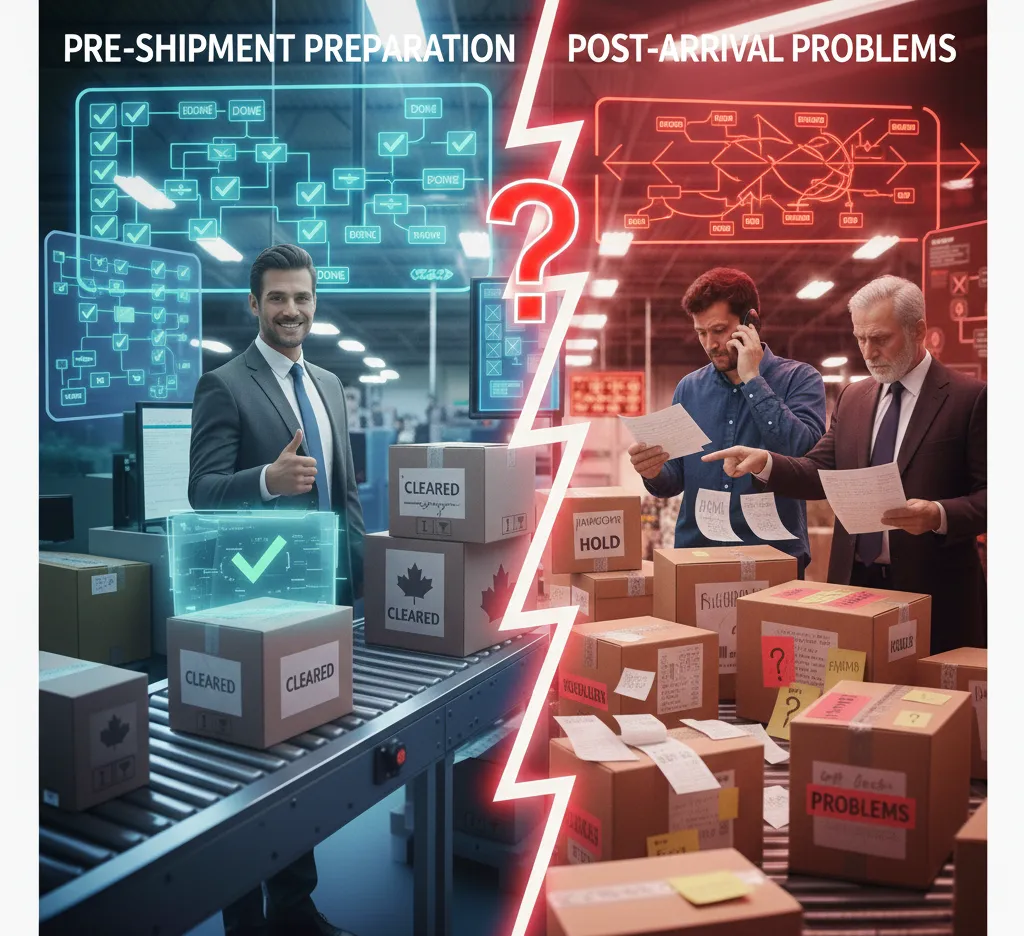
This question almost always comes with urgency:
The short answer is: sometimes, yes, but it usually causes delays and complications.
This post explains what actually happens when customs paperwork needs to be corrected after a shipment has already entered Canada.
One of the biggest misunderstandings we hear is:
“If it shipped, the paperwork must be fine.”
Shipping and customs are separate processes. A shipment can:
and still fail customs clearance if the paperwork doesn’t meet CBSA’s requirements.
This is why paperwork issues often surface after the shipment has left the building, not before.
CBSA may allow corrections for issues such as:
These fixes usually require:
CBSA is not just looking for an updated document. They need information they can legally rely on to assess duties, taxes, and admissibility.
Some issues are much harder to resolve once a shipment is in transit or has arrived at the border. These include:
In these cases, fixing paperwork may trigger:
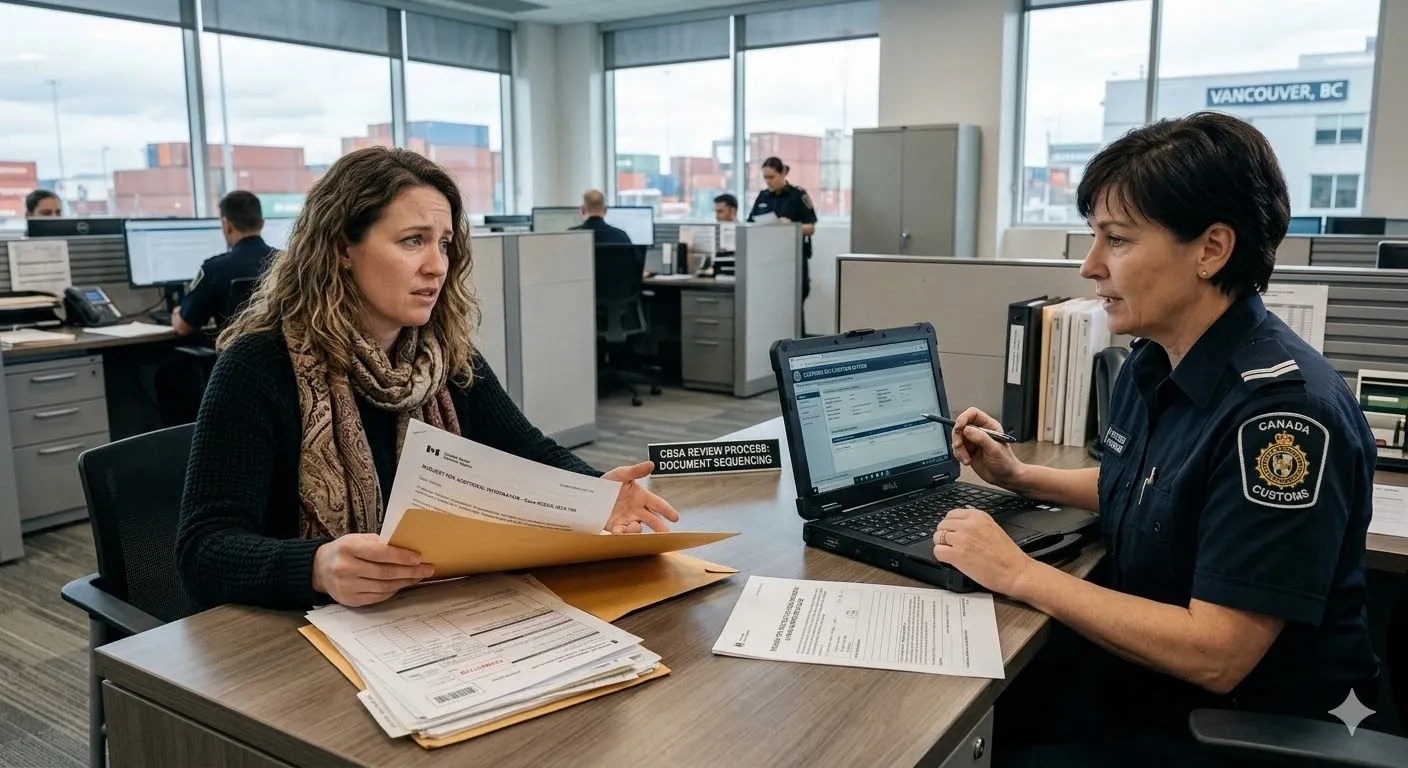
When CBSA identifies a paperwork issue after shipping:
Nothing moves forward until CBSA receives information it can rely on. This is why people often say:
“It’s just sitting there.”
Corrections after shipping take longer because:
Even small corrections can reset parts of the review process.
Yes, and this surprises many people. When documents are corrected:
This doesn’t mean the correction was wrong. It means CBSA is ensuring the updated information makes sense. Changes after departure can also raise compliance flags and increase the likelihood of additional review or inspection.
Waiting rarely helps. If you know the paperwork is incorrect:
Waiting until after arrival usually increases delays, not reduces them. The best time to fix paperwork is before CBSA has to ask.
When paperwork must be fixed after shipping, outcomes are better when:
Partial fixes or piecemeal updates often lead to more questions. Even if a broker submits corrections, the importer of record remains responsible for accuracy and any reassessments or penalties.
Paperwork fixes are common because:
Most people only learn how strict customs paperwork is once they’re affected by it. In some cases, incorrect declarations can lead to post-release adjustments or AMPS penalties, not just delays.
Yes, customs paperwork can sometimes be corrected after a shipment has already been sent but:
The easiest customs clearance problems to solve are the ones that never happen.
Use the BorderBuddy duty & tax calculator to understand how corrections can affect duties and taxes. BorderBuddy’s calculator also uses AI to help classify goods under the correct HS (Harmonized System) code, a key factor in determining the duty rate applied to an import.
People who ask this question usually ask next:
If you still didn’t find what you were looking for, BorderBuddy is here to help.
Our team can help you get clear answers and avoid delays at the border.

.svg)
.svg)