


.svg)
.svg)
























.png)
































Simplify your customs today
Calculate duties and taxes

.avif)
.avif)
.svg)
Streamlining customs clearance

.svg)
.svg)
.svg)
.svg)
import into canada
Import into the USA
.avif)
© 2026 Borderbuddy, All rights reserved.
Designed by SupaStellar



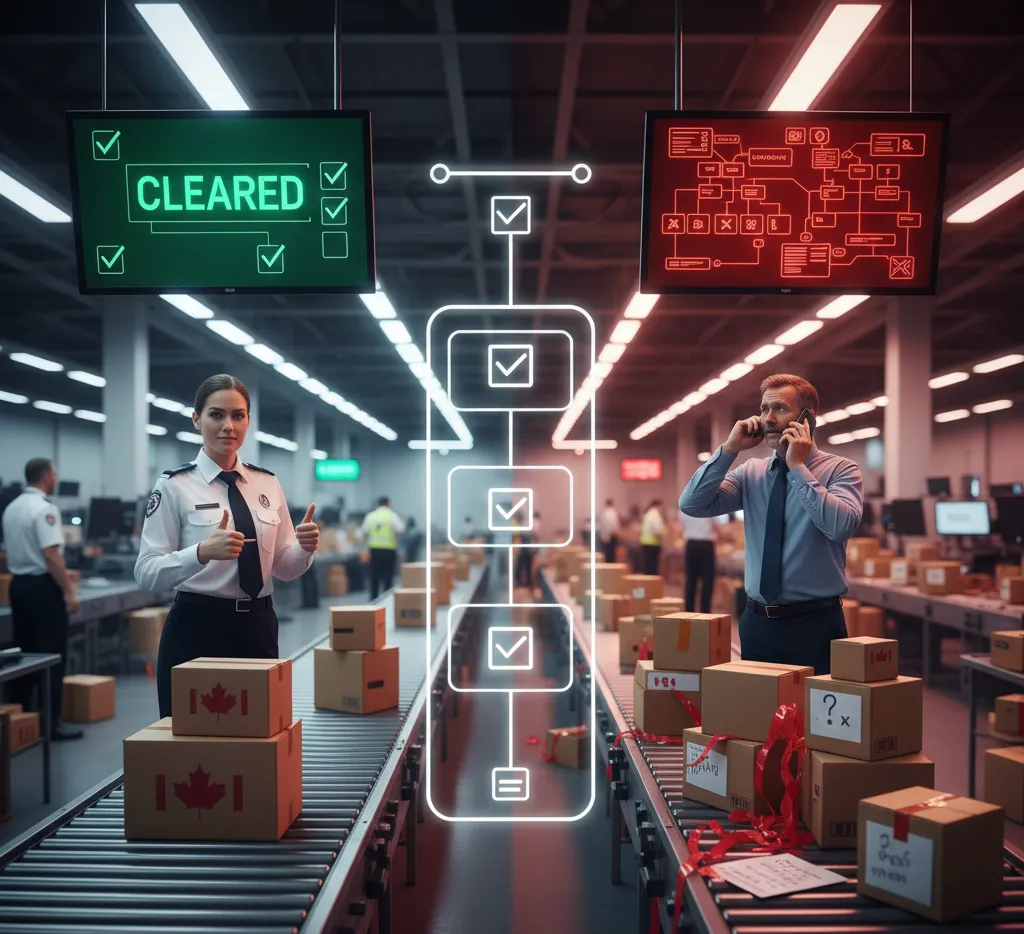
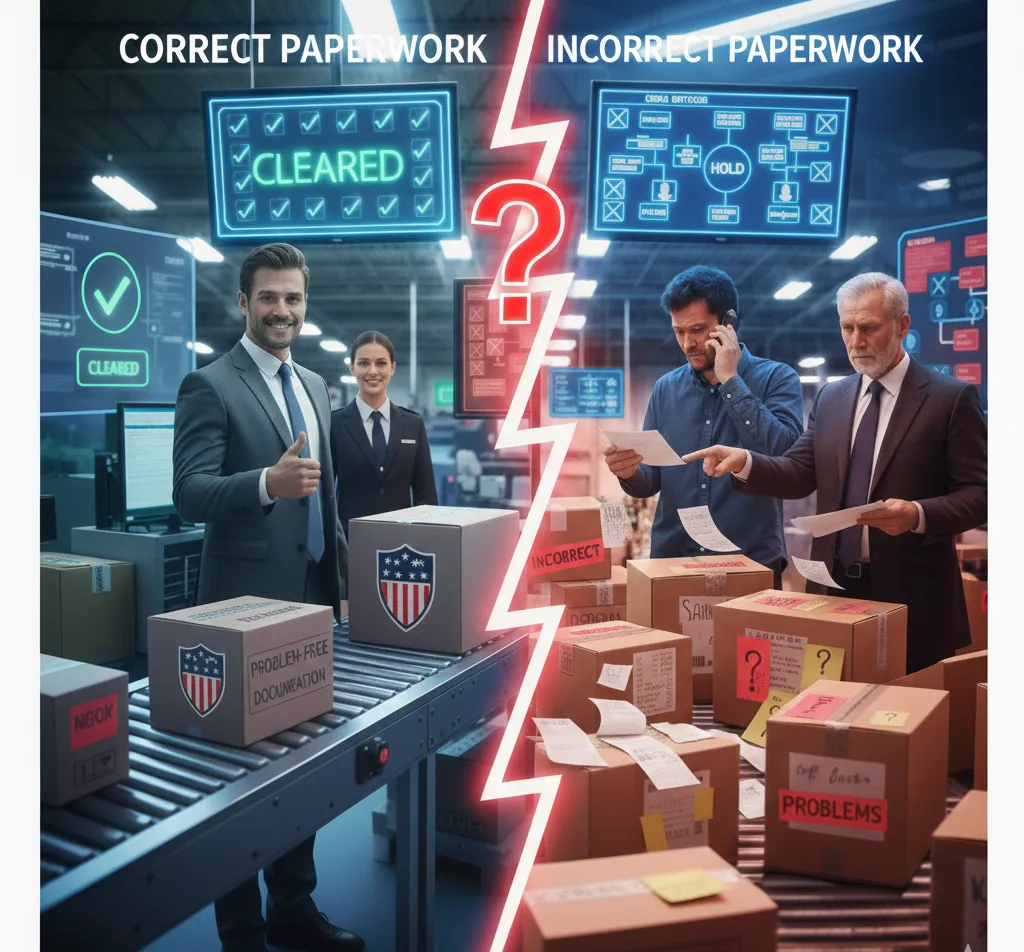
The most important issues begin with documentation mistakes. Some of those mistakes lead to delays. Others lead to penalties. U.S. Customs and Border Protection (CBP) expects import declarations to be accurate, complete, and consistent. When information turns out to be incorrect, the consequences can go beyond a simple correction. CBP may assess civil penalties for materially false statements, omissions, or acts of negligence in import declarations.
This post explains what happens when a U.S. import declaration contains errors and when penalties or fines may apply, based on patterns that repeatedly surface in real import situations.
An incorrect declaration can involve:
Even small inconsistencies can trigger a review. U.S. Customs relies on the declaration to calculate duties and determine admissibility. When the declaration does not match the shipment, customs takes action. Material inaccuracies that affect duty liability create the highest enforcement risk.
U.S. Customs reviews documentation closely. Issues often surface during:
When customs finds discrepancies between the goods and the declaration, it investigates further. CBP may compare entry data across multiple shipments to identify patterns of non-compliance.
When U.S. Customs identifies an incorrect declaration, it may:
The outcome depends on the severity of the error and the response provided. Failure to respond appropriately can escalate the matter from correction to formal penalty action.
Penalties usually arise when errors involve:
U.S. Customs distinguishes between minor clerical mistakes and serious compliance issues. Repeated or significant errors increase the risk of fines. CBP evaluates violations under three standards: negligence, gross negligence, and fraud. Penalty amounts increase substantially depending on the level of culpability.
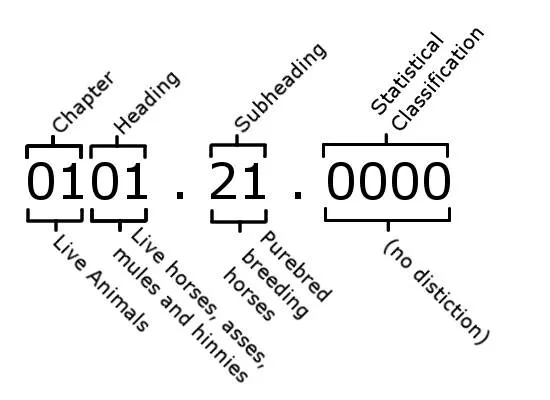
Classification determines duty rates. When the HTS classification does not match the product, customs may conclude that the declaration understated duties. That situation often leads to reassessment and potential penalties.
If the incorrect classification results in unpaid duties, penalties may be calculated as a percentage of the lawful duties owed or as a percentage of the value of the merchandise, including interest.
Accurate classification protects against unexpected cost exposure.
Declared value directly affects duties owed. If customs determines that the value does not reflect the actual transaction, it may:
Incomplete invoices or unclear pricing often lead to a deeper review. Related-party transactions are subject to additional scrutiny under U.S. valuation rules.
The importer of record (IOR) holds responsibility for the declaration. Even when a customs broker submits paperwork, the importer remains accountable for accuracy. Customs expects the responsible party to exercise “reasonable care” when preparing declarations.
Delegating filing to a broker does not transfer legal liability.
Imports face fewer compliance problems when:
Preparation and review reduce enforcement exposure. A timely prior disclosure can significantly reduce potential penalties under CBP rules.
Incorrect U.S. import declarations can lead to more than delays. U.S. Customs may reassess duties and impose penalties when errors affect duty calculation, admissibility, or compliance. Accuracy in classification, valuation, and documentation protects both the timeline and the cost.
Under U.S. customs law, importers are expected to exercise reasonable care in every declaration.
Accurate classification reduces both cost surprises and compliance risk.
Use the BorderBuddy duty and tax calculator to get a quote. It helps you estimate expected import duties, taxes and fees, potential tariff-related charges, and total landed cost before shipping.
BorderBuddy’s calculator also uses AI to help classify goods with the correct HTS classification, which determines duty rates on U.S. imports. Accurate classification strengthens compliance and reduces enforcement exposure.
People reviewing compliance risks often ask next:
If you still haven't found what you're looking for, BorderBuddy is here to help.
Our team can help you get clear answers and avoid delays at the border. For U.S. imports, accuracy is your strongest protection against penalties.

.svg)
.svg)