


.svg)
.svg)
































.png)





























Simplify your customs today
Calculate duties and taxes

.avif)
.avif)
.svg)
Streamlining customs clearance

.svg)
.svg)
.svg)
.svg)
import into canada
Import into the USA
.avif)
© 2026 Borderbuddy, All rights reserved.
Designed by SupaStellar


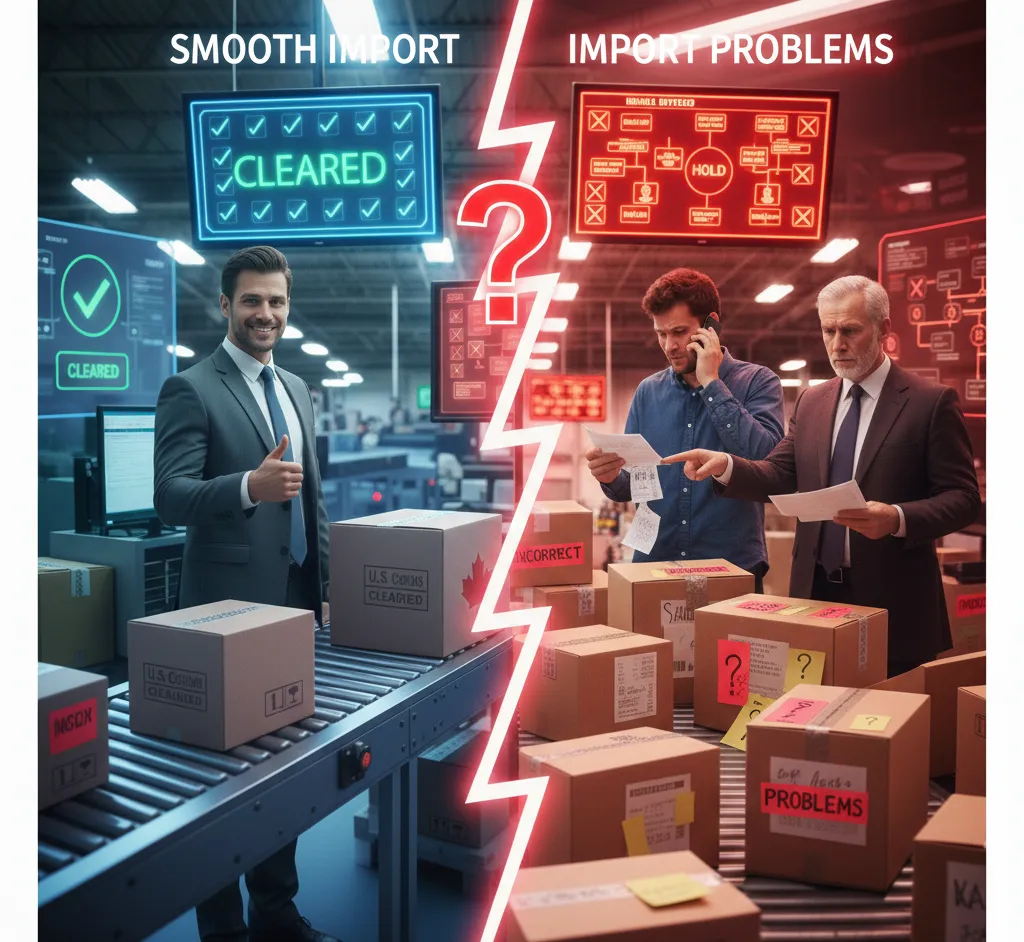
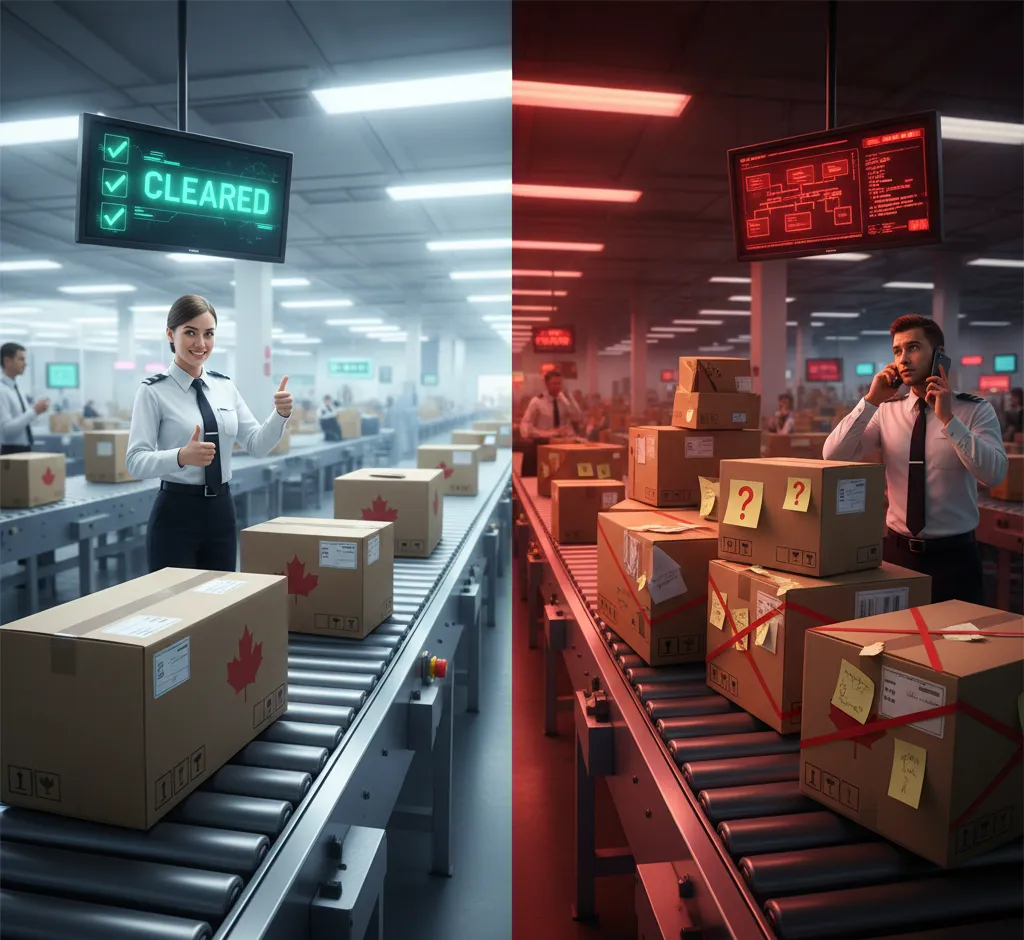
Many U.S. imports move smoothly until one issue interrupts the process. That issue may seem small at first. Then, clearance stops. When something goes wrong with a U.S. import, U.S. Customs and Border Protection pauses the process until the problem is resolved.
This post explains what happens when something is wrong with a U.S. import and how these situations typically unfold.
U.S. Customs reviews every import to confirm that the information submitted makes sense. Problems usually appear when:
U.S. Customs flags the shipment once it encounters unanswered questions. This may result in a hold status within ACE
When U.S. Customs identifies a problem, several actions may follow. U.S. Customs may:
The shipment does not move forward until U.S. Customs receives clear and complete information. In some cases, goods may be refused entry, exported, or destroyed if compliance cannot be demonstrated.
Based on repeated import scenarios, problems most often involve:
Generic descriptions slow review. U.S. Customs needs enough detail to understand what entered the country. Descriptions should explain:
Terms such as “parts,” “accessories,” or “equipment” frequently trigger clarification requests.
Classification drives duty rates and compliance treatment. When the HTS classification does not match the product, U.S. Customs raises questions. Incorrect classification often leads to reassessment or delay.
If CBP determines the classification is incorrect, it may reclassify the goods and assess additional duties, penalties, or trade remedy exposure.
U.S. Customs reviews the value to confirm that it aligns with the goods. Value issues arise when:
When the value remains unclear, clearance stops. CBP may request supporting documents such as purchase orders, contracts, or proof of payment.
U.S. Customs needs a clearly identified importer of record (IOR).
If responsibility remains unclear, U.S. Customs cannot finalize clearance or collect duties and fees. An unclear or improperly authorized importer of record may result in entry rejection.
Clearance resumes when the responsible party:
Delays grow longer when responses arrive slowly or only partially resolve the issue. Failure to respond can escalate the matter to enforcement review.
Import problems feel urgent because:
Early clarity prevents escalation. Post-arrival corrections are significantly more costly than pre-import compliance planning.
Imports face fewer disruptions when:
Preparation reduces the chance of last-minute issues. Pre-entry review with a licensed U.S. customs broker can significantly reduce enforcement risk.
When something goes wrong with a U.S. import, U.S. Customs pauses the process until the situation is clarified. Clear documentation, correct classification, and defined responsibility move imports forward.
CBP’s role is enforcement of U.S. import laws—not shipment facilitation—so compliance must be demonstrated before release.
Accurate classification and cost planning reduce surprises.
Use the BorderBuddy duty and tax calculator to get a quote. It helps you estimate expected import duties, taxes and fees, potential tariff-related charges, and total landed cost before shipping.
BorderBuddy’s calculator also uses AI to help classify goods under the correct HTS code, which determines duty rates and influences customs reviews. Accurate classification reduces both financial exposure and clearance delays, it is the responsibility of the importer to ensure accurate classification is being declared.
People dealing with import problems often ask next:
If you still didn’t find what you were looking for, BorderBuddy is here to help.
Our team can help you get clear answers and avoid delays at the border.

.svg)
.svg)