


.svg)
.svg)
























































.png)
















Simplify your customs today
Calculate duties and taxes

.avif)
.avif)
.svg)
Streamlining customs clearance

.svg)
.svg)
.svg)
.svg)
import into canada
Import into the USA
.avif)
© 2026 Borderbuddy, All rights reserved.
Designed by SupaStellar


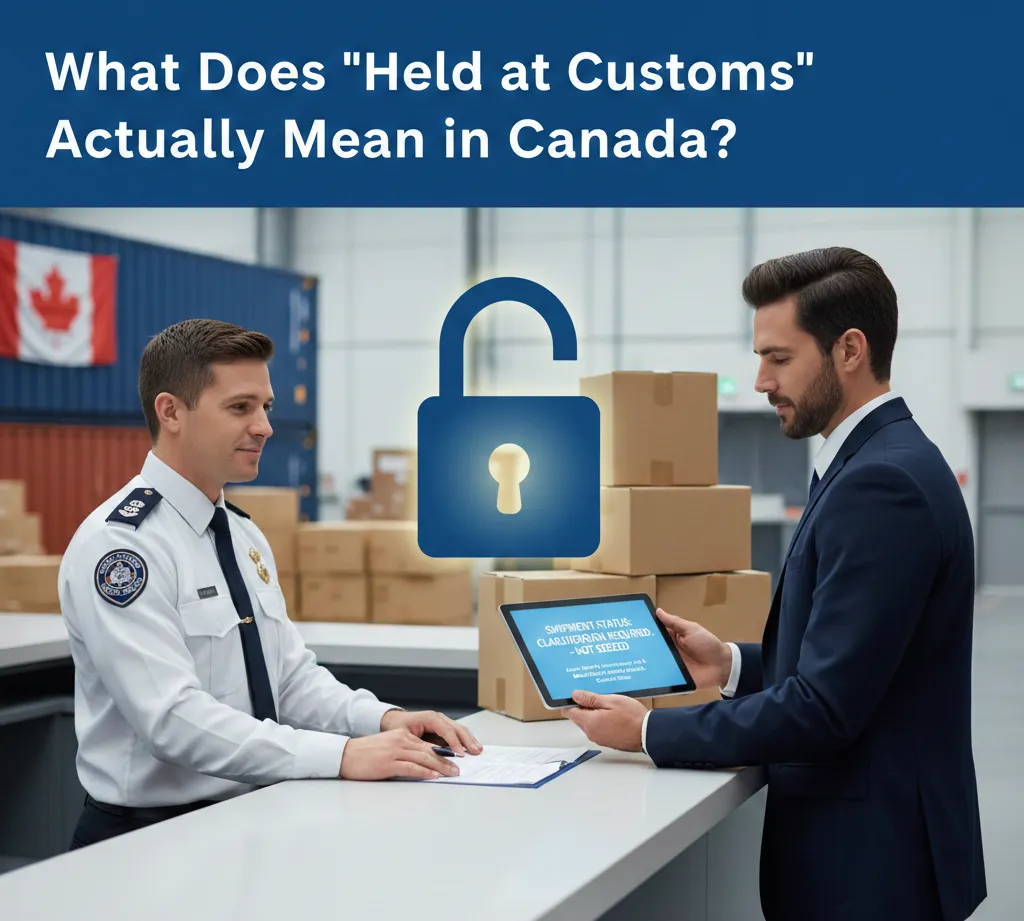
Few phrases trigger more anxiety than this one:
“Your shipment is held at customs.”
People often react by assuming:
In reality, “held at customs,” or “selected for customs examination,” or “held for customs inspection” in Canada usually means something much more specific and much less dramatic. This post explains what a customs hold actually means, based on how these situations tend to play out.
This is the most essential clarification. When a shipment is marked as held at customs, it usually means:
It does not automatically mean:
Most held shipments are released once the underlying issue is resolved.
Shipments are most often held because CBSA needs one or more of the following:
If CBSA cannot clearly determine:
They will place the shipment on hold until those questions are answered. This commonly happens with vague descriptions. Many “held for inspection” cases start with something as simple as CBSA not being able to tell precisely what the product is.
Invoice-related holds are extremely common. CBSA may place a hold if:
From the importer’s perspective, this often feels sudden, even though the issue existed from the start.
If CBSA cannot clearly identify who is responsible for the shipment, clearance stops. Holds occur when:
Until this is resolved, CBSA cannot proceed. Under CARM, holds can also occur if the importer is not correctly registered or has not delegated broker authority in the Client Portal.
Some shipments require more than a basic invoice. CBSA may place a hold while waiting for:
The shipment remains on hold until CBSA receives what it needs. This is especially common when Other Government Departments (OGDs) / Partner Government Agencies (PGAs) are involved, such as Health Canada, CFIA, or Transport Canada.
Some shipments are held because they are selected for:
This does not necessarily mean something is wrong. It means CBSA needs more confidence before releasing the goods. In carrier tracking systems, this may appear as “held for inspection” or “selected for customs examination,” even when no violation is suspected.
One of the biggest frustrations importers express is:
“The status just says ‘held’ and nothing else.”
Status messages usually indicate where the shipment is in the process, not why it’s there. They rarely explain:
That information usually has to be obtained separately. Carriers may use terms such as “pending customs clearance,” “release pending,” or “documentation required,” but the outcome is the same: CBSA cannot complete clearance yet.
There is no fixed timeline. A shipment can be held:
In almost every case, the length of the hold depends on how quickly the underlying issue is addressed.
Shipments are released when:
Time alone does not release a held shipment. Action does.
Based on real outcomes, holds tend to drag on when:
Most long holds trace back to communication or documentation gaps. Changes to paperwork after shipping can also increase scrutiny and extend a hold, because CBSA may treat amendments as a compliance risk indicator.
In Canada, “held at customs” usually means:
It does not automatically mean the shipment is lost or seized. Most held shipments are released once the real issue is identified and resolved.
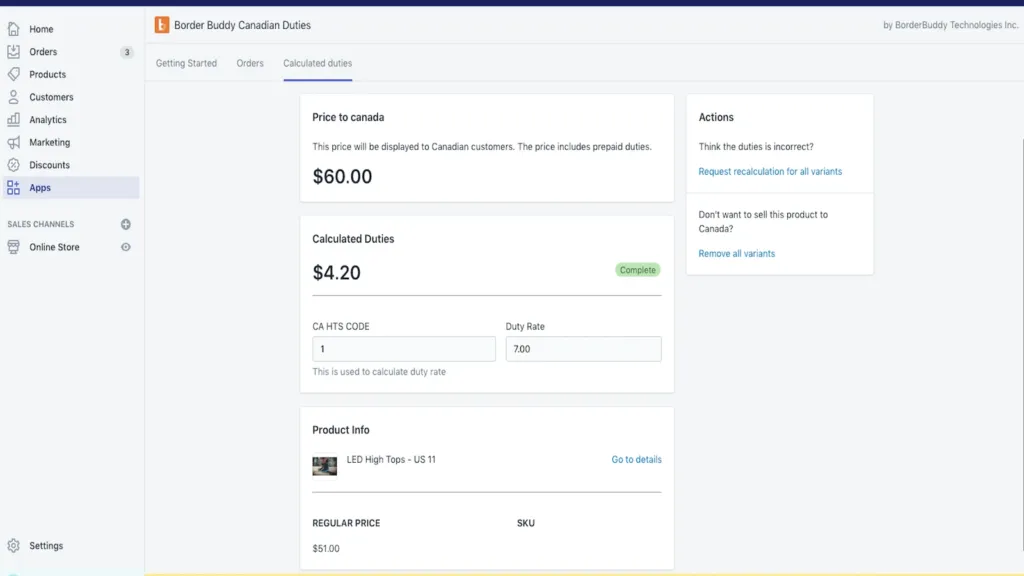
Check your estimated costs with BorderBuddy’s duty & tax calculator to identify potential issues. BorderBuddy’s calculator also uses AI to help classify goods under the correct HS (Harmonized System) code, a key factor in determining the duty rate applied to an import.
People who see a “held at customs” status usually ask next:
If you still didn’t find what you were looking for, BorderBuddy is here to help.
Our team can help you get clear answers and avoid delays at the border.

.svg)
.svg)