


.svg)
.svg)













.png)







































Simplify your customs today
Calculate duties and taxes

.avif)
.avif)
.svg)
Streamlining customs clearance

.svg)
.svg)
.svg)
.svg)
import into canada
Import into the USA
.avif)
© 2026 Borderbuddy, All rights reserved.
Designed by SupaStellar



One of the most confusing moments in importing to Canada happens when the numbers don’t line up. People expect the value used for duties and taxes to be simple:
Then CBSA assesses a different amount.
This leads to questions like:
This post explains why CBSA’s assessed value can differ from what you paid, based entirely on how this issue shows up in real import situations.
A recurring assumption is that:
In practice, CBSA assesses whether the price paid fully and clearly reflects the value of the goods being imported. If CBSA cannot confirm that, they may assess a different value. This difference is what surprises people most.
Based on real import experiences, CBSA often reassesses value when:
CBSA also reassesses value when the price paid does not include everything that must be part of the customs value. For example:
CBSA is trying to confirm the true value for duty purposes, not just the checkout price.
From the importer’s perspective, the invoice shows what was paid. From CBSA’s perspective, the invoice must explain why that price makes sense.
This phrase comes up repeatedly:
“But that’s what I paid for it.”
CBSA’s job is not to verify that the payment happened. It’s to assess a value they can rely on for calculating duties and taxes. If the documentation doesn’t clearly support the declared amount, CBSA may:
This is where expectations and reality diverge. The fastest way to resolve value questions is usually to provide clear supporting proof, such as payment confirmation, detailed invoices, or documentation explaining discounts or conditions of sale.
Value issues are closely tied to paperwork. Assessed values often change when:
Even when nothing is “wrong,” unclear documentation can lead CBSA to reassess value.
A frequent reaction is:
“They increased the value for no reason.”
From the patterns in the transcripts, value appears higher because:
The reassessment is not arbitrary. It reflects what CBSA can confidently support based on the information provided.
For example, if you paid $10,000 for a vehicle but the invoice does not explain the condition, mileage, or terms of sale, CBSA may assess value based on Kelly Blue Book reference pricing rather than the unsupported declared amount.
Or for ecommerce:
If goods are declared at $50 but appear to be a commercial shipment normally sold for $300, CBSA may ask for proof before accepting the lower value.
Another surprise point is timing. Many people expect the value to be fixed once documents are submitted. In reality, value can change when:
When information changes, the assessment changes with it. Even after release, CBSA can reassess value later through audit or verification, which is why clear valuation support matters upfront.
Value-related questions slow clearance because:
This is why value disputes are often tied to long holds and escalations.
From the transcripts, value issues surface late because:
Most people only learn how the CBSA views value when clearance stops.
CBSA Customs Valuation Handbook – how value for duty is established
CBSA follows well-defined valuation rules under Canada’s customs legislation. When transaction value cannot be verified, CBSA may apply alternate methods to determine a supportable value.
CBSA’s assessed value is not simply what you paid. It is the value CBSA can:
When that value isn’t clearly supported, CBSA may assess a different amount. Clarity in documentation keeps the assessed value aligned with expectations.
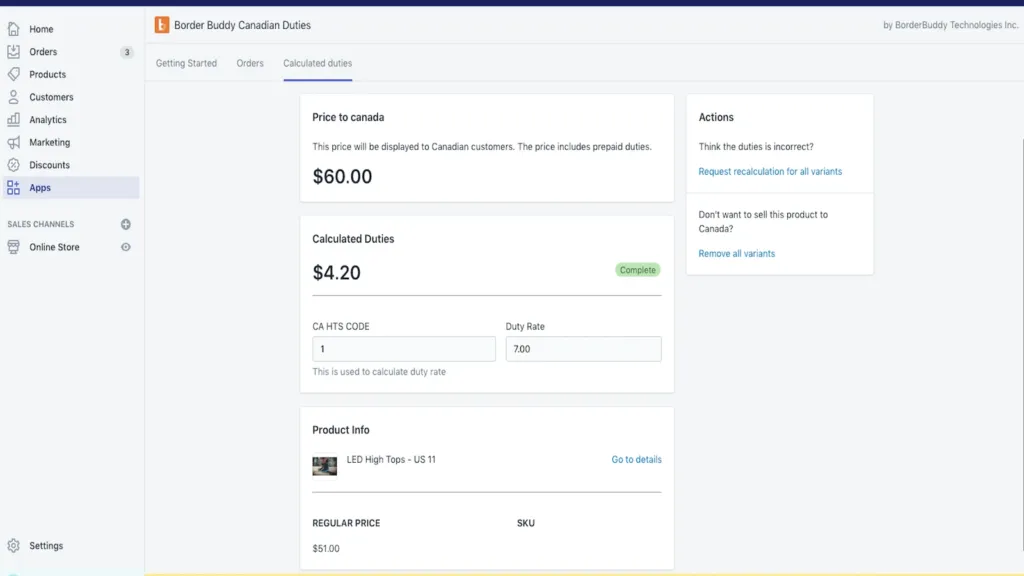
Use the BorderBuddy duty & tax calculator to get a quote. It helps you understand how value affects duties and taxes, what CBSA may assess and where surprises often come from. BorderBuddy’s calculator also uses AI to help classify goods under the correct HS (Harmonized System) code, a key factor in determining the duty rate applied to an import.
People who question assessed value usually ask next:
If you still didn’t find what you were looking for, BorderBuddy is here to help.
Our team can help you get clear answers and avoid border delays.

.svg)

.svg)