


.svg)
.svg)


























































.png)



Simplify your customs today
Calculate duties and taxes

.avif)
.avif)
.svg)
Streamlining customs clearance

.svg)
.svg)
.svg)
.svg)
import into canada
Import into the USA
.avif)
© 2026 Borderbuddy, All rights reserved.
Designed by SupaStellar



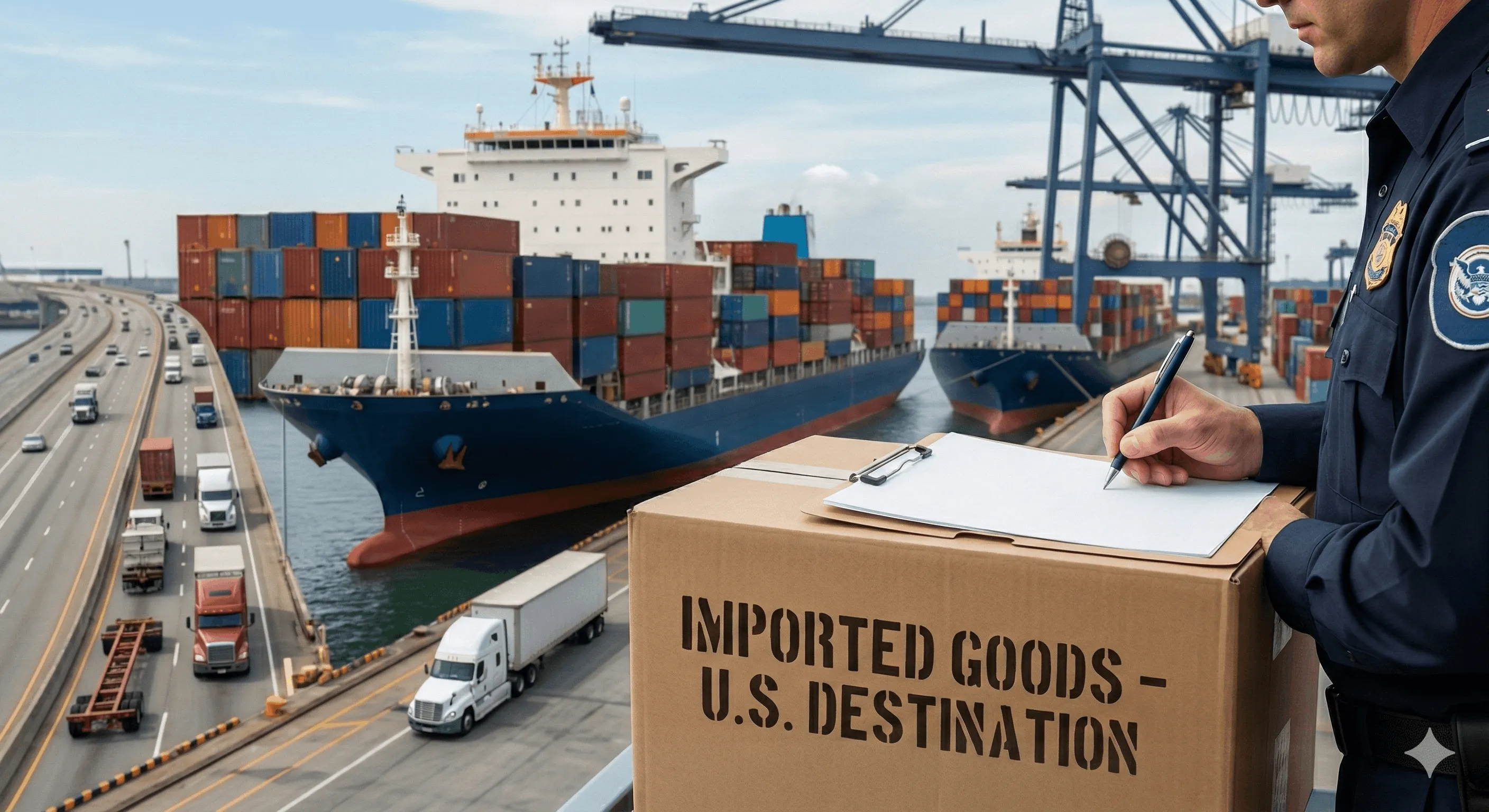
One of the fastest ways for an import into the United States to stall or stop in its tracks is simple:
U.S. Customs does not have the required documentation to clear the shipment.
Many imports reach the border with shipping paperwork, but customs clearance requires something more specific:
This post explains what documents are required for U.S. customs clearance, based entirely on the same document issues and misunderstandings that repeatedly appear in real import scenarios.
The commercial invoice is the foundation of U.S. customs clearance.
CBP relies on the invoice to understand:
Most customs document problems begin when the invoice does not clearly explain the shipment.
A shipment can still be delayed even when an invoice is attached. Delays happen when invoices include:
Customs does not just need an invoice. Customs needs an invoice that answers the right questions. In many cases, CBP delays occur not because paperwork is missing, but because the documentation is incomplete or inconsistent.
U.S. customs clearance requires knowing who is responsible for the import. If the importer's details are unclear, customs cannot finalize:
Responsibility must be established early, or clearance slows down. CBP must be able to identify the Importer of Record and confirm that an active customs bond is in place when required. Importers are also required to retain customs entry records for five years in case CBP audits the shipment after release.
One of the most common document-related issues is that the goods are not described clearly enough for classification. Descriptions like:
They are often too generic. A good product description clearly explains what the item is, what it is made of, and how it is used.
CBP needs documentation that supports correct classification, because classification determines duty treatment. The correct HTS code is the primary factor in determining duty rates, admissibility, and whether additional tariffs apply.
Depending on the shipment, U.S. Customs may request additional documentation after submission, such as:
These requests typically appear when the initial documents do not provide enough clarity for clearance. Some shipments also require review by other federal agencies, such as the FDA, USDA, EPA, or FCC, which can trigger additional documentation requirements. For regulated goods, clearance depends not just on duties, but on whether the product is legally admissible under U.S. rules.
Many people assume that submitting paperwork ends the process. In reality, CBP may request more information when:
Follow-up requests are part of clearance when details are incomplete. These requests may come through formal CBP notices, such as a CF28 Request for Information.
U.S. customs clearance depends less on the number of documents and more on whether the documents clearly explain:
Delays often happen when the documents are present, but key details don’t align clearly enough for customs review. In today’s environment of heightened enforcement and additional duty exposure, documentation accuracy matters more than ever.
Documentation and classification directly affect duty rates.
Use the BorderBuddy duty & tax calculator to get a quote. It helps you estimate expected import duties, taxes and fees, potential tariff-related charges, and total landed cost before your shipment reaches the border.
BorderBuddy’s calculator also uses AI to help classify goods under the correct HTS (Harmonized Tariff Schedule) classification, a key factor in determining duty rates on US imports.
People asking about US customs documents often ask next:
If you still didn’t find what you were looking for, BorderBuddy is here to help.
Our team can help you get clear answers and avoid delays at the border.

.svg)
.svg)