


.svg)
.svg)












































.png)


























Simplify your customs today
Calculate duties and taxes

.avif)
.avif)
.svg)
Streamlining customs clearance

.svg)
.svg)
.svg)
.svg)
import into canada
Import into the USA
.avif)
© 2026 Borderbuddy, All rights reserved.
Designed by SupaStellar


If you ask people why their shipment is delayed, most of them eventually say some version of this:
The confusion usually isn’t about whether documents exist. It’s about which documents CBSA needs, why they need them, and what happens when they’re incomplete.
This post explains the documents required for customs clearance in Canada, based on the issues that repeatedly come up with our customers.
Almost every customs clearance issue starts here. CBSA uses the commercial invoice to understand:
At a minimum, the invoice should clearly show:
What causes problems is not a missing invoice, but an invoice that exists but doesn’t clearly explain the shipment. Descriptions such as “goods,” “parts,” or “items” are common triggers for delays.
A phrase we hear constantly is:
“The invoice was attached, so I don’t understand the issue.”
CBSA doesn’t just check whether an invoice is attached. They check whether it answers their questions.
Invoices cause delays when:
When this happens, CBSA requests clarification before clearance can proceed.
CBSA needs to know who is responsible for the shipment in Canada. This is where many people are caught off guard.
The importer of record is responsible for:
If importer details are missing, incorrect, or disputed, clearance pauses.
This is why some importers say:
“They’re asking me questions, but I didn’t think this was my responsibility.”
Depending on the shipment, CBSA may also require additional documentation. These can include:
Not every shipment needs all of these. But when CBSA requires them, clearance does not proceed without them.
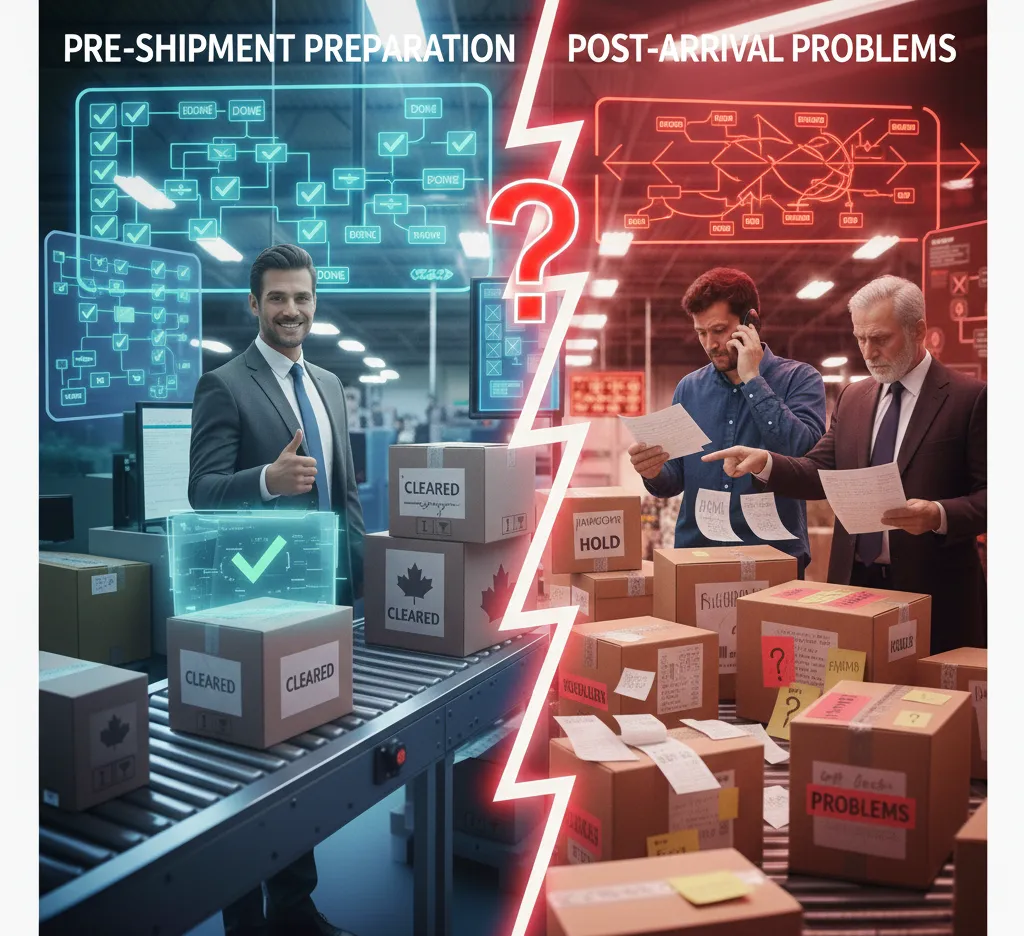
Many delays happen because these documents were not prepared before shipping.
Another common question is:
“Why are they asking for more documents now?”
This usually happens because:
This doesn’t mean the shipment is in trouble. It means CBSA needs more information to finish clearance.
One important misunderstanding is treating shipping paperwork and customs paperwork as the same thing.
Shipping documents are designed to facilitate the movement of a package. Customs documents are designed to explain it.
A shipment can move smoothly through a carrier’s system and still fail at customs if the documentation doesn’t meet CBSA requirements.
Sometimes, yes. But fixing documents after a shipment has been sent:
This is why importers often say:
“I wish I had known this before it shipped.”
Preparing documents correctly upfront is always easier than fixing them later.
CBSA doesn’t expect perfection, but they do expect clarity. Most customs delays related to documents happen because:
When documents clearly explain the shipment, clearance usually proceeds smoothly.
Clear documents are only part of the picture; costs still matter.
Use the BorderBuddy duty & tax calculator to see how duties and taxes are calculated for your shipment. BorderBuddy’s calculator also uses AI to help classify goods under the correct HS (Harmonized System) code, a key factor in determining the duty rate applied to an import.
People who ask about documents usually ask these next:
If you still didn’t find what you were looking for, BorderBuddy is here to help.
Our team can help you get clear answers and avoid delays at the border.

.svg)
.svg)