


.svg)
.svg)




.png)
































































Simplify your customs today
Calculate duties and taxes

.avif)
.avif)
.svg)
Streamlining customs clearance

.svg)
.svg)
.svg)
.svg)
import into canada
Import into the USA
.avif)
© 2026 Borderbuddy, All rights reserved.
Designed by SupaStellar


Before a product can enter the United States, U.S. Customs and Border Protection (CBP) must decide whether it is admissible. Many shipments reach the border with complete shipping paperwork, yet clearance still stops. Admissibility usually explains why.
This post explains how U.S. Customs and Border Protection determines whether a product is admissible, based on the same issues that repeatedly arise in real import situations.
Admissibility refers to whether merchandise is legally permitted to enter the United States under all applicable federal laws and regulations. U.S. Customs allows a product to enter the country under current import rules. U.S. Customs reviews admissibility to confirm that a product:
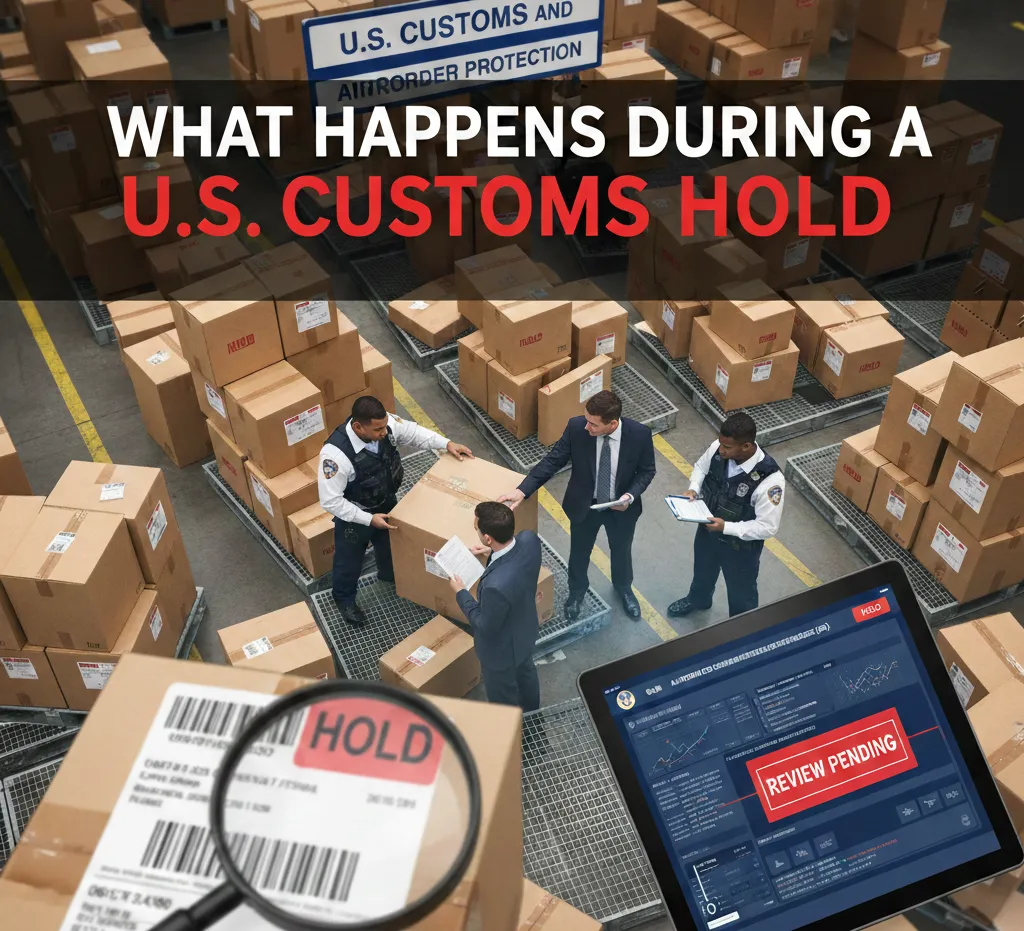
If U.S. Customs cannot confirm admissibility, clearance does not move forward. In some cases, goods may be held, refused entry, exported, or destroyed.
Many imports encounter admissibility questions after the shipment arrives because:
Admissibility checks often occur during document review or inspection rather than at the time of purchase. By that point, storage fees, demurrage, and timing pressure may already be increasing.
U.S. Customs relies on several practical inputs when reviewing admissibility.
U.S. Customs looks closely at how the product is described. Broad or generic descriptions slow down the review.
Clear descriptions explain:
Specific descriptions help U.S. Customs understand how to treat the product. Generic terms such as “parts,” “accessories,” or “equipment” often trigger requests for clarification.
Classification plays a central role in admissibility. The Harmonized Tariff Schedule Classification (HTSUS):
Incorrect or unclear classification often triggers admissibility questions. If CBP disagrees with the classification, it may reclassify the goods and assess additional duties.
Some products receive additional scrutiny because of their category.
U.S. Customs reviews whether the product:
Even common goods can raise questions if documentation does not clearly explain their use or composition.
U.S. Customs compares information across all documents.
Admissibility issues arise when:
Consistency helps U.S. Customs complete the review faster. Inconsistencies often result in a Request for Information (CBP Form 28) or a Notice of Action (CBP Form 29).
When U.S. Customs cannot confirm admissibility, several outcomes may follow:
Clear answers move the process forward. Waiting without responding does not. Failure to respond promptly can extend holds and increase storage and exam costs.
Admissibility feels sudden because:
Most admissibility problems stem from a lack of clarity earlier in the process. Admissibility is a legal determination—not a transportation milestone.
Imports face fewer admissibility problems when:
Preparation reduces the chance of last-minute questions. Pre-import compliance review is significantly less expensive than post-arrival correction.
U.S. Customs determines admissibility by reviewing the product, its classification, and whether the documentation supports entry under all applicable U.S. laws and agency regulations.
When those elements align clearly, products move through customs with fewer interruptions. When they do not, clearance can be stopped regardless of the shipment's value or urgency.
Classification affects both admissibility and duty rates. It also determines whether additional regulatory controls apply.
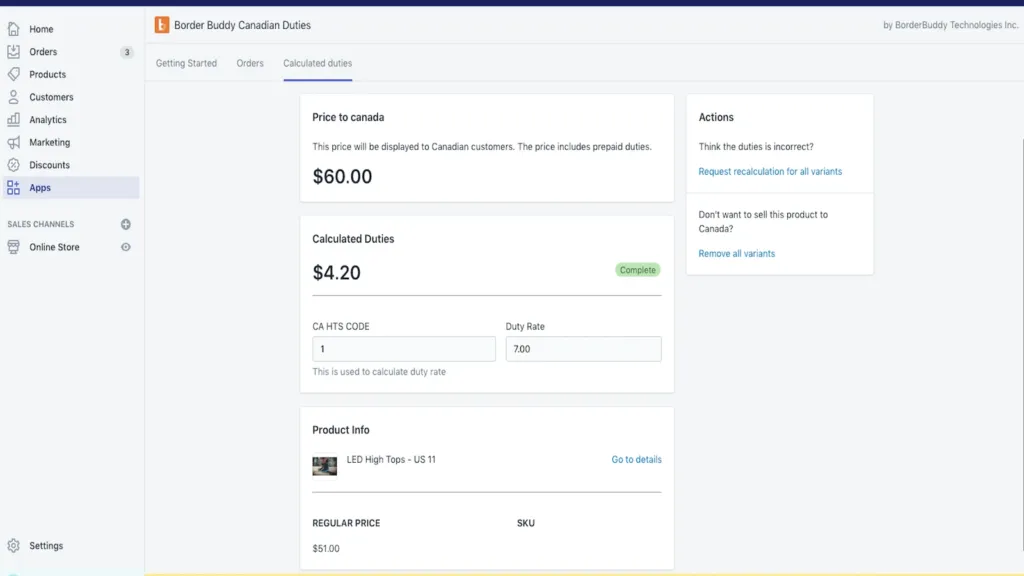
Use the BorderBuddy duty and tax calculator to get a quote. It helps you estimate expected import duties, taxes and fees, potential tariff-related charges, and total landed cost before shipping.
BorderBuddy’s calculator also uses AI to help classify goods under the correct HTS code, which determines duty rates and influences admissibility reviews. Accurate classification reduces both cost surprises and compliance risk.
People reviewing admissibility often ask next:
If you still didn’t find what you were looking for, BorderBuddy is here to help.
Our team can help you get clear answers and avoid delays at the border.

.svg)

.svg)