


.svg)
.svg)













































.png)






















Simplify your customs today
Calculate duties and taxes

.avif)
.avif)
.svg)
Streamlining customs clearance

.svg)
.svg)
.svg)
.svg)
import into canada
Import into the USA
.avif)
© 2026 Borderbuddy, All rights reserved.
Designed by SupaStellar


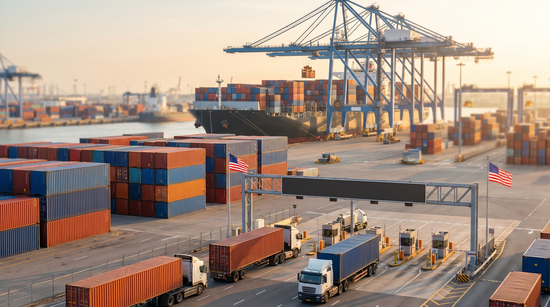
If you import into the United States more than a couple of times a year, a continuous customs bond is almost always the cheaper, simpler choice. It covers every shipment you bring in over a 12-month period, at every U.S. port of entry, under a single bond. You buy it once, and it keeps working in the background until you renew it.
This guide explains what a continuous customs bond is, how the bond amount and premium are set, when U.S. Customs and Border Protection (CBP) requires one, and how to get yours arranged through a customs broker without the paperwork landing on your desk. Prefer to talk it through now? Call BorderBuddy at +1 (877) 409-8163 or email service@borderbuddy.com.
A continuous customs bond is a one-year financial guarantee to CBP that you will pay all duties, taxes, and fees owed on your imports, covering an unlimited number of shipments at any U.S. port. It stays active for 12 months and renews automatically each year unless you cancel it.
The bond is a three-way agreement between you (the importer of record), CBP, and a surety company. If you fail to pay what you owe, the surety pays CBP first and then recovers the amount from you. A continuous bond does not reduce your duties or taxes. It guarantees payment so your goods can be released.
A continuous customs bond covers all of your import activity for the year, so you never arrange bond coverage shipment by shipment. Once it is on file with CBP, every entry you file draws against the same bond.
In practice, it covers:
Most importers hold the bond under activity code 1, the standard importer/broker bond. Your customs broker files it with CBP on your behalf after you sign a Power of Attorney (POA), which authorizes them to transact customs business in your name. From that point, the bond is tied to your importer of record number and applies automatically to future entries.
If you import three or more times a year, a continuous bond is the better value. If you import once or rarely, a single-entry bond usually costs less for that one shipment. The break-even point sits around three shipments in a 12-month period.
The two bonds solve the same problem in different ways:
For a frequent importer, buying a single-entry bond for every shipment adds cost and administration fast. A continuous bond replaces all of that with one annual policy, which is why importers who ship regularly switch to it. If you are still deciding between formal and informal entry thresholds, our guide to formal vs informal entry into the U.S. explains when a bond becomes mandatory.
A continuous customs bond for most small and mid-sized importers costs roughly $500 to $700 per year for the minimum $50,000 bond, paid as an annual premium to the surety. The premium is a small fraction of the bond amount, not the full bond value, because the bond is a guarantee rather than a deposit you hand over.
Two separate numbers matter here, and importers often confuse them:
So an importer who paid $300,000 in duties last year would need a bond amount of $30,000, which rounds up to the $50,000 minimum. An importer who paid $800,000 in duties would need an $80,000 bond. The premium scales with that bond amount.
Because the bond amount is tied to your duty history, growing importers sometimes find CBP requires a larger bond mid-year. A broker monitors this so your bond stays sufficient and your entries are not held. Want a firm number for your import volume? Get a customs bond quote, or call us at +1 (877) 409-8163 or email service@borderbuddy.com and we will size the bond and the premium for you.
CBP requires a customs bond on any commercial import valued at $2,500 or more, and on any import regulated by a partner government agency regardless of value. A continuous bond is not legally separate from this requirement. It is one way to satisfy it for all your shipments at once.
You need bond coverage when:
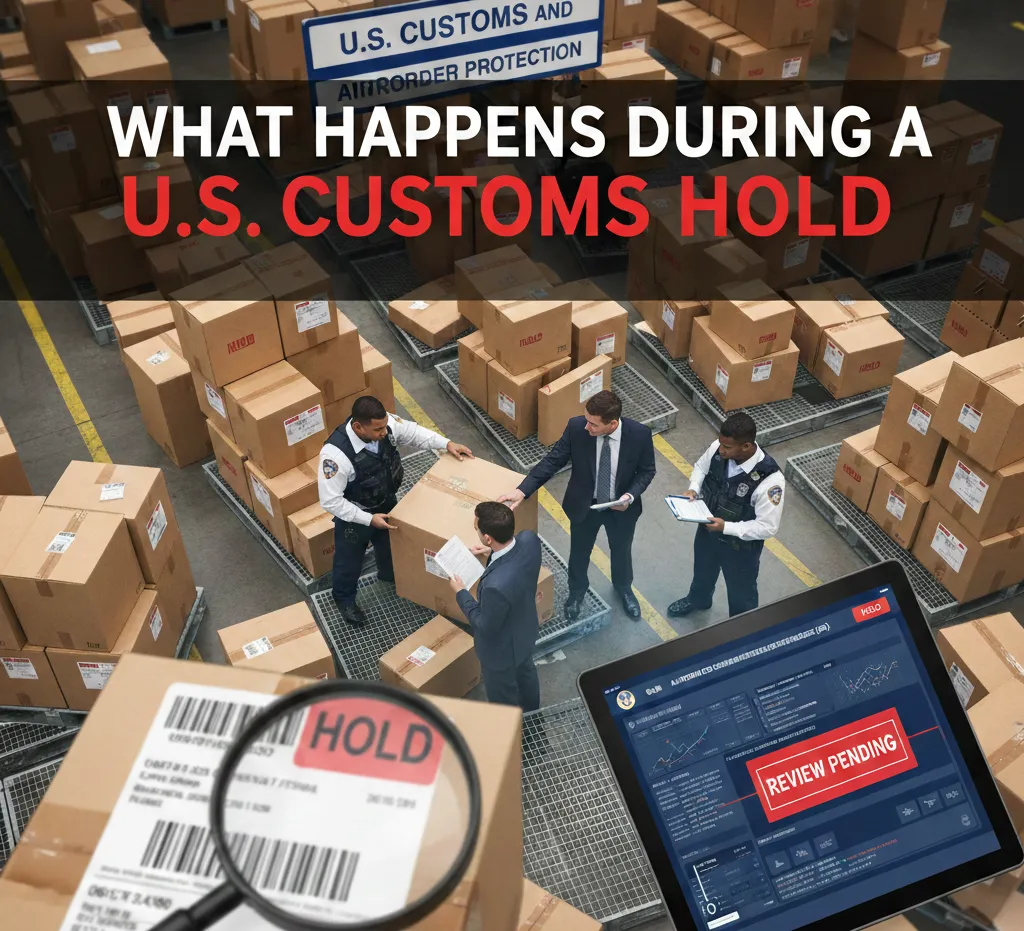
A continuous bond is the practical choice in all of these cases once you import regularly, because it covers each of them under the same annual policy. If your goods get held at the border, our guide on what happens during a U.S. customs hold walks through the next steps.
The fastest way to get a continuous customs bond is through a licensed customs broker, who arranges the bond with a surety and files it with CBP for you. You provide a few business details and sign a Power of Attorney, and the broker handles the rest.
The process generally looks like this:
When your shipment reaches the border, BorderBuddy's licensed brokers arrange the continuous bond, classify your goods under the correct HS code, calculate duties, and file your entry, so your freight clears without you chasing surety paperwork. We also handle ISF for ocean freight under the same bond. To get started, call +1 (877) 409-8163 or email service@borderbuddy.com.
A continuous bond in customs is a one-year guarantee to CBP that an importer will pay all duties, taxes, and fees on their imports. It covers unlimited shipments at every U.S. port and renews annually, unlike a single-entry bond that covers just one shipment.
Most importers pay about $400 to $600 per year for the minimum $50,000 continuous bond. The exact premium depends on your bond amount, which is set at 10% of the duties, taxes, and fees you paid over the prior 12 months, with a $50,000 minimum.
For a $50,000 customs surety bond, the annual premium is typically a few hundred dollars rather than the full bond value, because you are paying for a guarantee, not depositing the bond amount. Your final rate depends on the surety and your import history.
A continuous customs bond lasts 12 months from its effective date and renews automatically each year unless you or CBP cancel it. There is no need to rebuy it for each shipment during that period.
A continuous customs bond is the right call for any business importing into the U.S. more than a few times a year. It satisfies CBP's bond requirement for every shipment at once, covers ISF, and costs less than buying single-entry bonds shipment by shipment. The bond amount follows your duty history, and the premium is a small annual cost for keeping your freight moving.
The part most importers want off their plate is the setup: sizing the bond, dealing with the surety, and filing with CBP. BorderBuddy's licensed brokers will size your continuous bond, place it with a surety, and file it with CBP, so you can import all year without arranging coverage one shipment at a time.

.svg)

.svg)